
Reviewed · TE PUIA AND MAORI CULTURAL TOURS
Ex Auckland: TE PUIA Geothermal, Redwood & Blue Springs
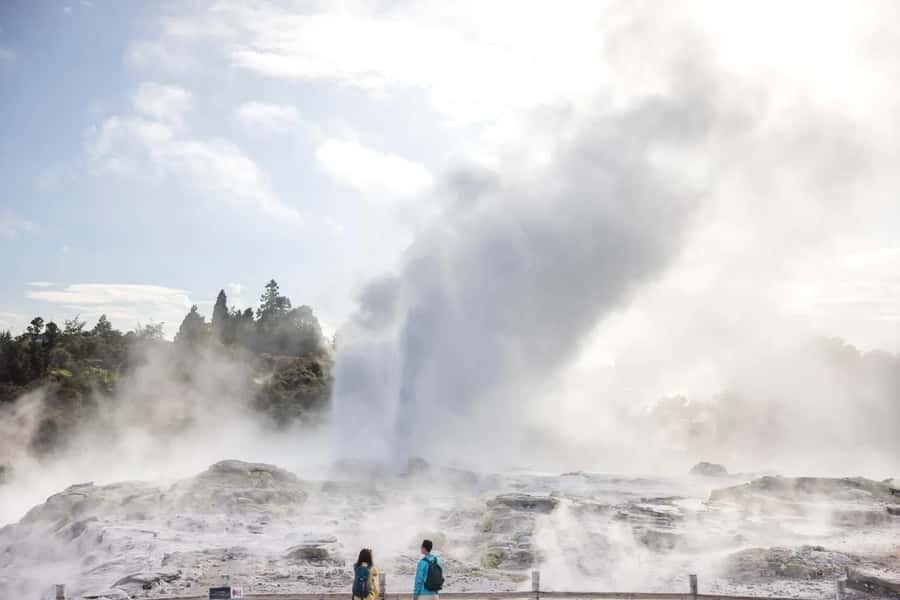
Pōhutu Geyser is the star here, sending regular bursts of steam and hot water into the air from the Te Whakarewarewa Thermal Valley. You also get a rare mix of geothermal sights, kiwi conservation, Māori arts, and live performance in one long day from Auckland.
I like the well-rounded Te Puia visit, which brings together geysers, mud pools, carving, weaving, and a haka without making you arrange separate tickets. I also like the small roadside stops in Tirau and beside the Waikato River, useful breaks on a long bus day. The drawback is the schedule: 12 hours is a big commitment, and the early pickup plus long return ride may feel tiring.
Key points to know before booking
- Pōhutu Geyser is the main event: See the largest active geyser in the Southern Hemisphere from inside Te Puia’s thermal valley.
- A kiwi viewing is built in: The Kiwi Conservation Centre gives you a chance to see New Zealand’s famous nocturnal bird.
- Māori culture is part of the visit: The program includes carving, weaving, stories, and a performance with waiata, poi, chant, and haka.
- Tirau breaks up the outbound drive: You get about 15 minutes for a restroom stop, coffee, and photos of its corrugated iron buildings.
- The day runs from early morning to evening: Pickup begins around 5:45 AM, with Auckland CBD drop-off planned for about 6 PM.
- Lunch is not included: Plan to buy food at Te Puia’s café or restaurant.
Why Te Puia works as a Rotorua day trip
Rotorua is one of New Zealand’s most rewarding places for a first look at Māori culture and geothermal activity. The problem is distance. It is roughly a full day from Auckland once you add the drive, time at the site, breaks, and the return journey.
This tour solves that planning problem. You leave Auckland before breakfast, ride south through the Waikato region, spend the central part of the day at Te Puia, and return to Auckland in the evening. You do not have to arrange a rental car, navigate Rotorua parking, or choose between a geothermal park and a cultural show.
The trade-off is simple: convenience costs time. You will spend many hours on the road, and the day will feel packed. If you have only one day available and want a broad taste of Rotorua, that is a fair exchange. If you prefer slow walks, long meals, or several hours at one site, stay overnight in Rotorua instead.
More Maori cultural experiences:
- Waitomo Caves & Rotorua – Te Puia Small-Group Tour from Auckland
★ 4.5 · 681 reviews - Auckland: Waitomo Caves & Rotorua – Te Puia Small-Group Tour
★ 4.8 · 223 reviews - Hobbiton & Rotorua Small Group Tour including Te Puia from Auckland
★ 5.0 · 190 reviews
The early Auckland pickup and the road south
Pickup is scheduled from Auckland CBD hotels between 5:45 and 6 AM. Auckland Airport hotels are picked up later, around 6:15 to 6:30 AM. You should be waiting at the hotel entrance at least 10 minutes before your stated time.
Look for a vehicle marked ENZOY TOURS, or use the vehicle number provided before departure. Correct hotel details and a working phone connection matter here. The operator recommends a local SIM or international roaming, along with WhatsApp, for contact during the day.
The early start is not glamorous, but it serves a purpose. It gives you enough time in Rotorua for the guided Te Puia program, the cultural performance, lunch, and the driving tour before heading back north. Bring water and a small breakfast if you need one, since coffee and food stops do not come until later.
The tour uses round-trip bus transportation. The exact vehicle size and group size are not stated, so do not book this expecting a private car outing unless the operator confirms that separately. Your guide is an important part of the day. Guides Ambrose and Denish have been singled out for being flexible and helpful, including adjusting plans for a family with two young children. That personal touch can matter on a long day with several moving parts.
Tirau gives you a quick taste of Waikato

After about two hours on the road, the first break comes in Tirau. You get roughly 15 minutes, enough to use the restroom, stretch, buy a coffee or light snack, and take a few photographs.
Tirau is known for its imaginative corrugated iron buildings, including dog and sheep shapes. It is a small stop rather than a major attraction, so keep your expectations in check. You will not have time for a full town visit or relaxed shopping. Still, it is a smart choice for the first break because the buildings offer something distinctive to look at instead of another anonymous service station.
I like this kind of stop on a long organized tour. It gives you a chance to reset before the next hour of driving. Keep an eye on the clock, though. Fifteen minutes disappears quickly, especially if you need coffee and a restroom.
Entering Te Puia and the Te Whakarewarewa Thermal Valley
From Tirau, the bus continues for about an hour to Rotorua and Te Puia. This is the heart of the day.
Te Puia sits within the Te Whakarewarewa Thermal Valley, a place shaped by heat, water, steam, and volcanic activity. The guided visit lasts 90 minutes, and all Te Puia experiences are now guided. Arrive 15 minutes before your scheduled start time so you are ready to go.
The walking route brings you past boiling mud pools, geothermal vents, Māori artworks, and sculptures. The sights are close enough together to make the most of a limited visit, but you should still wear comfortable shoes. Paths and outdoor viewing areas can be wet, uneven, or exposed to changing weather, so sunscreen, a hat, water, and weather-appropriate clothing are sensible choices.
Pōhutu Geyser is the big draw. It is the largest active geyser in the Southern Hemisphere, and its bursts give the valley a sense of force you cannot get from a photograph. Steam, mineral colors, hot pools, and the smell of geothermal activity make this feel like a living place rather than a landscaped park.
Your guide adds useful meaning to what you see. Without explanation, a mud pool can look like a brown, bubbling puddle. With context, it becomes part of a much larger geothermal system and a place tied closely to the people who have lived alongside it.
More Hamilton and Blue Springs trips:
- TRIPLE DEAL Wai-O-Tapu, Redwood Forest & Blue Springs Ex Auckland
★ 5.0 · 20 reviews - Hobbiton Movie Set and Hamilton Gardens Small Group-from Auckland
★ 5.0 · 19 reviews - Redwood Forest , Blue Springs & Huka Falls Day Tour from Auckland
★ 4.5 · 19 reviews - Private Hobbiton & Blue Springs Day Trip from Auckland
★ 5.0 · 13 reviews
The kiwi centre gives the day a conservation focus
The Kiwi Conservation Centre is another strong part of the visit. It gives you the chance to see New Zealand’s iconic kiwi bird in a controlled setting.
Kiwi are difficult to spot in the wild. They are nocturnal, shy, and not the kind of bird you can expect to see during a normal daytime walk. A conservation centre is therefore a practical way to learn about and view the species during a day tour.
Keep your expectations realistic. This is not a promise of a close encounter or a guarantee that a bird will remain in view. The value is in having a proper chance to see a kiwi as part of a broader conservation program, rather than simply looking at a display about one.
For families, this may be one of the most memorable stops. One family with two young children found the combination of kiwi, geyser, Māori arts, and performance especially satisfying because so much was gathered in one place. You get variety without moving the children between several separate attractions.
Māori carving, weaving, and stories at Te Puia
Te Puia is not only a geothermal park. It is also home to the New Zealand Māori Arts and Crafts Institute, where traditional carving and weaving are demonstrated.
This part of the visit adds depth to the outdoor sights. You see Māori artwork and sculptures across the site, then learn more about the skills behind them. Guides also share stories passed down through generations, giving the art a cultural setting rather than treating it as decoration.
The wānanga, or school, is an important part of Te Puia’s work. It presents Māori culture as a living practice that is taught, used, and carried forward. You may see artists at work and learn how carving and weaving remain active skills.
This is one reason the tour offers more value than a simple geyser visit. A geothermal park alone may take only a few hours. Here, the same admission connects the natural setting with Māori arts and education.
Still, the 90-minute guided format means you will not have unlimited time to study every piece or linger at every stop. If you enjoy museums and detailed craft displays, you may wish the visit were longer. The advantage is that the guide keeps the day moving and helps you see the main elements within a fixed schedule.
The performance in Te Aronui a Rua meeting house
The Māori cultural performance takes place in the carved Te Aronui a Rua meeting house. It includes a traditional pōhiri, or welcome, waiata, song, mōteatea, chant, poi, and haka.
A live performance gives the cultural material a human voice and rhythm. The poi and haka are visually striking, but the program is broader than the famous haka alone. The welcome, songs, and chants help place the performance within Māori protocol and storytelling.
The setting matters. A carved meeting house is not the same as watching a stage show in a generic theater. The art surrounding you helps connect the performance to the wider visit at Te Puia.
The performance is included as part of the planned program, but confirm the exact timing when you book because guided schedules can change. You should also arrive early, since late arrival may mean missing part of the experience.
Lunch and the Rotorua driving tour
Lunch is at your own expense inside the Te Puia café or restaurant. This is useful to know before you go. The tour does not include a packed meal, and there may not be time to search for another restaurant during the day.
Plan to buy something at Te Puia, or carry a small snack for the road if permitted. You will likely appreciate having food ready after the morning pickup and guided visit. Prices and menu details are not provided, so allow extra money beyond the $234 tour price.
After Te Puia, the itinerary includes about an hour of driving around Rotorua. The vehicle also picks up other people from attractions and drops off anyone checking into Rotorua hotels. That means this section is partly a city highlights drive and partly an operational transfer.
Do not treat it as a full Rotorua sightseeing tour with long stops. It is better understood as a useful overview from the bus, combined with the transport needs of other passengers. If you want extended time at Rotorua’s lakefront, museums, or other attractions, you will need a separate visit.
The Waikato River stop on the way back
The return journey includes a stop beside the Waikato River. It gives you another chance to leave the bus, stretch your legs, and take in open views near the water.
This is a welcome change after the geothermal heat and the long ride. The stop is scenic rather than activity-based, so bring your camera and enjoy it as a short pause. The exact duration is not specified, so stay close to the vehicle and follow your guide’s instructions.
The bus is expected back at Auckland CBD hotels around 6 PM. Traffic can affect any Auckland arrival, so avoid scheduling a tight evening connection or nonrefundable dinner reservation immediately afterward.
Is $234 good value for this day?
At $234 per person, this is not a cheap bus excursion. The price makes more sense when you count what it bundles: hotel pickup and drop-off, round-trip transport, Te Puia admission, a guided geothermal visit, the Māori cultural performance, and the Kiwi Conservation Centre.
You are also paying for planning. A self-drive visitor would need to arrange a rental car, fuel, parking, Te Puia tickets, and the route between Auckland and Rotorua. The bus removes that work and lets you focus on the attractions.
The value is strongest if you want to see several sides of Rotorua in one day. You get nature, conservation, Māori culture, live performance, and roadside scenery. The value is weaker if you already have a car, plan to sleep in Rotorua, or want to spend more time at one attraction.
The schedule is the main cost that is not shown on the price tag. You leave before breakfast and return in the evening. For many people, that is worthwhile for a one-day North Island overview. For others, the same money may be better spent on a slower overnight itinerary.
Who should book this tour?
I would recommend it to first-time visitors based in Auckland who want a practical introduction to Rotorua without renting a car. It suits families who value a varied day, especially since the kiwi centre, geyser, arts, and performance are all in one location.
It also works well for people with a strong interest in Māori culture. The guided visit, arts institute, meeting house, and performance give you more than a quick geothermal photo stop.
You should think twice if you have back problems, dislike long bus rides, or need a slow pace. The tour information also gives conflicting accessibility details: it says the activity is wheelchair accessible, but it separately lists wheelchair users as not suitable. Contact ENZOY Tours before booking if you use a wheelchair or need specific assistance.
Bring comfortable shoes, a hat, sunscreen, water, a camera, and clothing for changing weather. Smoking is not allowed.
FAQ
How long is the tour from Auckland?
The full activity lasts about 12 hours. Pickup begins around 5:45 AM to 6 AM from Auckland CBD, with drop-off planned around 6 PM.
Where does pickup take place?
Pickup is available from Auckland CBD hotels between 5:45 and 6 AM. Auckland Airport hotels are scheduled for pickup between 6:15 and 6:30 AM.
What is included at Te Puia?
The visit includes entry to Te Puia Rotorua Geothermal Park, a guided geothermal tour, a Māori cultural performance, and entry to the Kiwi Conservation Centre.
Is lunch included?
No. Lunch and coffee are not included. You should plan to buy lunch at the Te Puia café or restaurant at your own expense.
How long is the guided Te Puia visit?
All Te Puia experiences are guided and last 90 minutes. You should arrive 15 minutes before the scheduled start time.
Can I cancel the tour?
You can cancel up to 24 hours in advance for a full refund.
Should you book it?
Book this tour if you want the broadest possible Rotorua introduction in one day from Auckland. Pōhutu Geyser, kiwi conservation, Māori arts, and the performance make a strong combination, and included transport saves you a great deal of planning.
Skip it if you want a relaxed Rotorua stay or dislike early starts and long road days. The best choice depends on your available time. For a single Auckland base and one big North Island outing, this is a useful, well-filled day.
Recently added around Auckland
- Waiheke Island: Gulf Marine Park Sailing Adventure & Lunch★ 5.0 · 4 reviews
- Waiheke Island: Scenic PREMIUM Wine Tour. Max 11 clients★ 4.9 · 8 reviews
- Flavours of Waiheke, wine, beer, spirits INCLUDES lunch – MAX 11★ 5.0 · 9 reviews
- Waiheke Island: Premium Vineyard, Wine Tasting and Bush Walk★ 5.0 · 4 reviews
- Waiheke Island Private Double Headland Walk★ 5.0 · 5 reviews
- Heke Brewery and Distillery Tour in Waiheke Island with samples★ 4.5 · 3 reviews
- Waiheke Island Private Art Tour★ 5.0 · 5 reviews
- Waiheke Island Private History and Heritage Tour★ 4.5 · 7 reviews
Te Puia and Maori Cultural Tours, compared.
Waitomo Caves & Rotorua – Te Puia Small-Group Tour from Auckland
Read our review →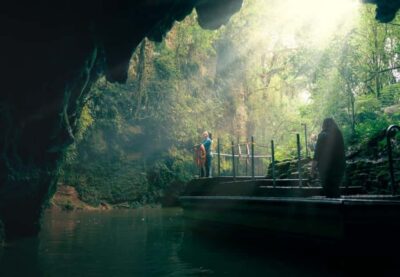
Waitomo Caves & Rotorua – Te Puia Small-Group Tour
Read our review →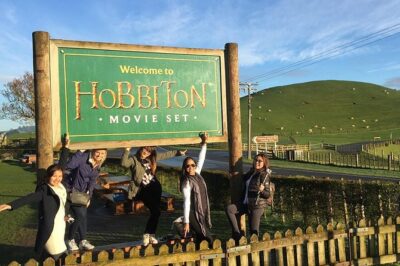
Hobbiton & Rotorua Small Group Tour including Te Puia from Auckland
Read our review →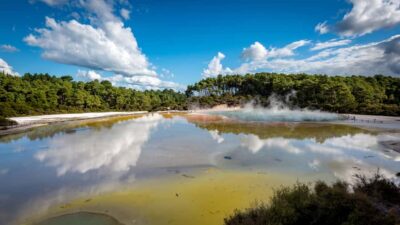
Hobbiton and Rotorua Day Tour including Te Puia
Read our review →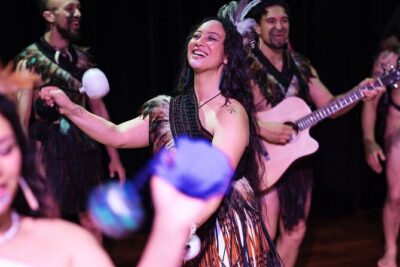
Māori Cultural Experience & Auckland Museum General Admission
Read our review →Browse the lists this tour appears in