Reviewed · GUIDED
Guided Tour at Pukorokoro Shorebird Centre
Thousands of shorebirds gather along the Pukorokoro Shorebird Coast, turning an ordinary-looking estuary into a remarkable wildlife scene. From the bird hides at Robert Findlay Wildlife Reserve, you can use telescopes to pick out godwits, red knots, wrybills, and other birds that travel astonishing distances to feed here.
I like the tour’s tide-based timing, which puts the birds in the right place when you need them there. I also like the personal side of the guiding. Chelsea is praised for answering questions clearly, while Trudy leads a relaxed Saturday walk with plenty of useful detail. The main drawback is simple: poor weather can cancel the visit, and the walking is not a good match for people with very limited mobility.
Key points at a glance
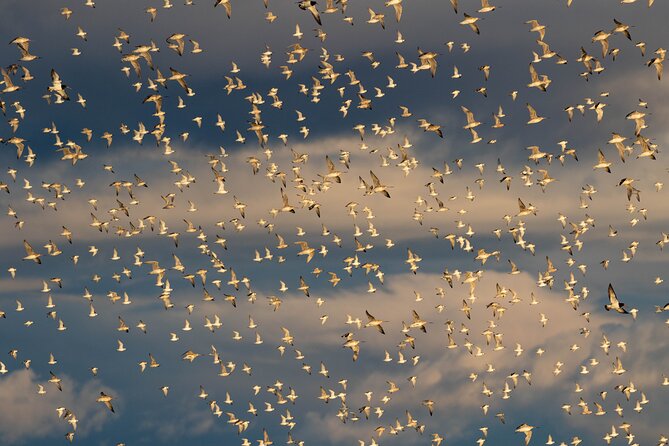
- Thousands of shorebirds at one reserve: Walk to the hides at Robert Findlay Wildlife Reserve for a chance to see large groups in their natural wetland habitat.
- Tide-timed bird watching: The schedule is set around the tides, so the birds are more likely to be feeding in view.
- A 90-minute guided walk: The whole experience focuses on one reserve rather than a long list of stops.
- Telescopes are included: You do not need to bring a spotting scope, though binoculars are useful if you have them.
- Migration and conservation take center stage: Learn about kuaka, the Māori name for the bar-tailed godwit, and the pressures shorebirds face.
- A private activity for your group: The tour is designed for only your booking party, with accommodation available at the Centre for a longer visit.
Why this estuary matters
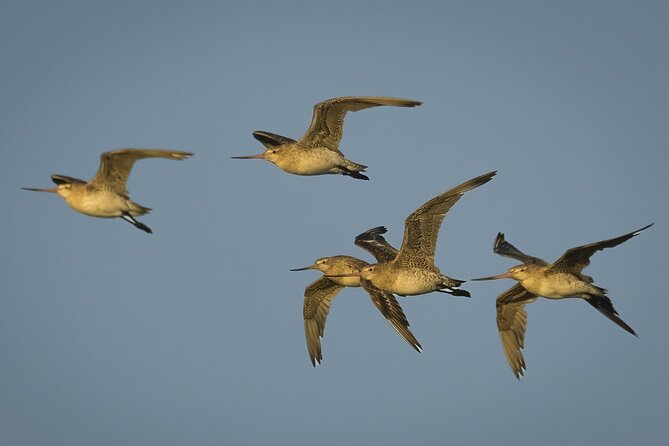
Pukorokoro, also known as Miranda, sits on a coast shaped by tides, mudflats, and geology. That combination creates feeding ground for shorebirds, including birds that spend only part of the year in New Zealand.
This is not a zoo visit or a quick stop beside a scenic lookout. The birds are living freely across an internationally significant wetland, and their location can change with the tide. That makes the timing important. It also means the experience has the honest uncertainty of real wildlife watching.
The guide helps you read what is in front of you. At first, a distant flock may look like a gray-and-white patch beside the water. With a telescope and some instruction, you can start separating species and noticing different bills, body shapes, and feeding habits.
That identification is part of the fun. The difference between a wrybill and a godwit is not obvious to every first-time observer, but a good guide can show you what to look for. The tour is designed to make those details understandable rather than leaving you to guess.
A few more Auckland trips worth comparing
- Hobbiton & Waitomo Caves Guided Day Trip from Auckland incl lunch
★ 5.0 · 2,677 reviews - Hobbiton & Waitomo Caves Guided Tour from Auckland with Lunch
★ 4.5 · 796 reviews - Auckland: All Blacks Experience Guided Cultural Tour
★ 4.7 · 453 reviews
Walking to the Robert Findlay Wildlife Reserve hides
The main outing lasts about 1 hour and 30 minutes, and it stays focused on Robert Findlay Wildlife Reserve. You walk around the reserve and continue to the bird hides, where the telescopes are used to scan the wetland.
The route gives you a useful mix of movement and quiet observation. You are not simply standing in one spot for the full session, but neither are you being hurried from one attraction to another. The pace suits a visit built around watching birds, asking questions, and waiting for a good view.
The hides are especially useful when shorebirds are spread across open ground. A telescope brings distant birds closer and lets the guide point out what you are seeing. You should still bring binoculars if you have them, as they let you keep watching while another person uses the telescope.
The walk is not recommended for people with very limited mobility. The supplied information does not give a detailed path description, distance, or surface conditions, so I would ask the Centre about current walking requirements before booking if mobility is a concern.
Meeting godwits, wrybills, and red knots
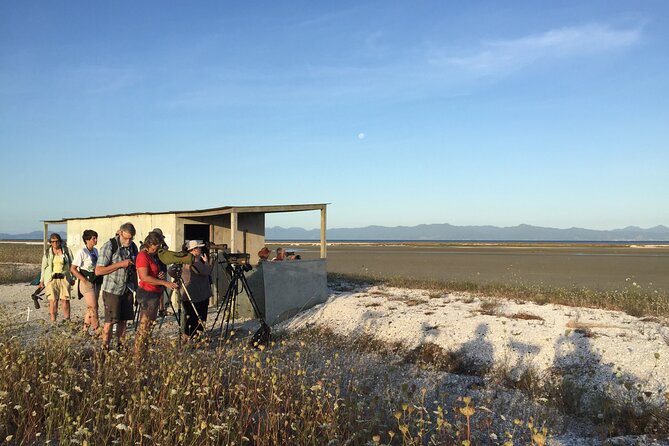
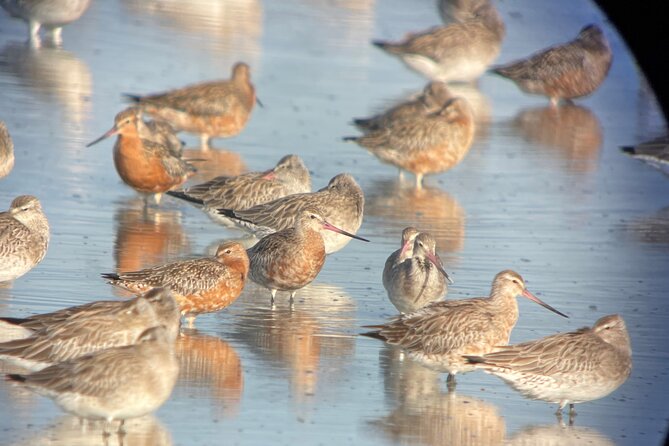
The bird list is one of the strongest reasons to book. The experience introduces you to kuaka, or bar-tailed godwits, along with wrybills, red knots, and other shorebird species.
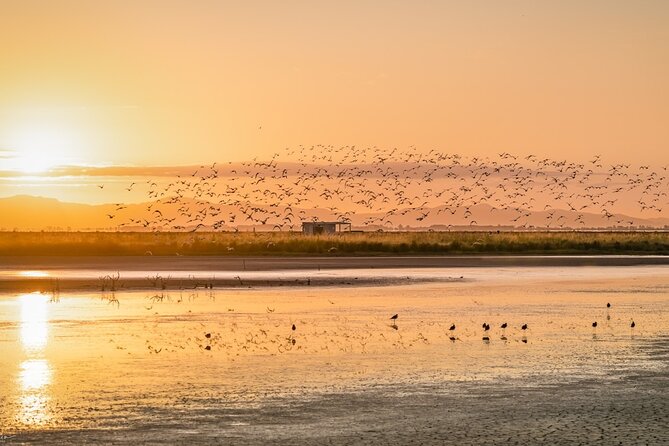
The godwits are the headline birds for many visitors. Seeing thousands gathered in one area gives you a clear sense of scale that a single bird in a field guide cannot provide. Their migration story is also a major part of the visit, and the guide explains the long journeys these birds make and the problems they face along the way.
Wrybills add another point of interest. Their unusual bills make them easier to distinguish once the guide shows you the shape to look for. If you are new to shorebirds, this kind of practical identification lesson is more useful than a list of scientific names.
Red knots and other migrators add variety to the scene. You might find yourself watching a large flock first, then focusing on a smaller group when the guide spots a different species. The variety keeps the 90-minute walk from feeling like a single-bird assignment.
The exact sightings can never be guaranteed. Bird numbers, positions, weather, and tides all affect what you see. That is not a flaw in the tour, but it is worth understanding before you book. You are paying for access, equipment, timing, and interpretation, not a guaranteed checklist.
How the guide changes the experience
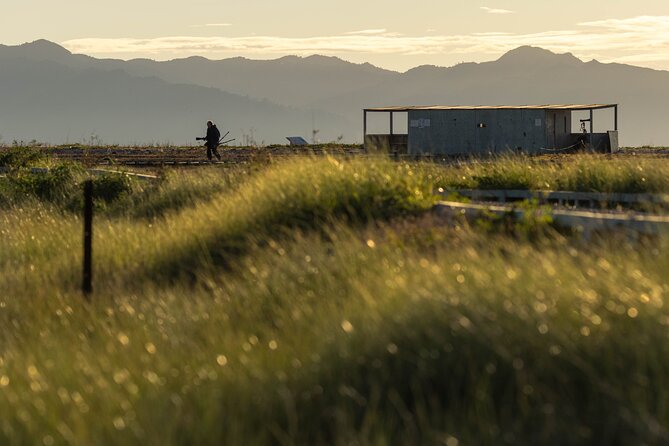
The Centre’s guides are central to the value of this outing. Chelsea is described as friendly and able to answer questions about the birds, while Trudy leads a relaxed and enlightening walk. Those details matter because shorebird watching can be confusing without someone to connect the small visual clues to a larger story.
A good guide also keeps the experience from becoming too technical. You can ask basic questions without feeling out of place, or focus on migration and conservation if you already know your birds. The emphasis is on clear explanation and direct observation.
The private format is another advantage. Only your group takes part, so the guide can respond to your interests instead of following a fixed script for a large crowd. A beginner may need help telling a godwit from a wrybill, while an experienced bird watcher may want to focus on less familiar species.
The information provided does not promise a particular guide for every departure. Chelsea and Trudy are names associated with the Centre’s guided walks, but you should not assume one of them will lead your booking unless the Centre confirms it.
Same drive out of the city, a very different day:
- Waiheke Island: Ferry & Hop-On Hop-Off Explorer Bus Tickets
★ 4.6 · 3,311 reviews - From Auckland: Hobbiton & Waitomo Caves Day Trip with Lunch
★ 4.9 · 2,505 reviews - Auckland Dolphin and Whale Watching Eco-Safari Cruise
★ 4.5 · 1,790 reviews - Auckland: Hobbiton Movie Set Day Trip with Festive Lunch
★ 4.8 · 1,431 reviews
Why the tide timing matters
Shorebird watching is tied closely to the water. As the tide changes, feeding areas appear and disappear, and the birds shift position. Scheduling the walk around the tides gives you a better chance of seeing birds gathered where the telescopes can reach them.
This is one of the tour’s most practical strengths. A general nature walk at the wrong time might show you a beautiful wetland with very few birds in view. Here, the timing is planned around the birds’ behavior rather than simply around a convenient departure hour.
You should still arrive ready for changing conditions. The tour requires good weather, and a poor-weather cancellation results in a choice of another date or a full refund. Bring your own water, since bottled water is not included, though you can refill bottles at the Centre.
Snacks are also not included. The Centre can recommend local places to eat, which is useful if you are making this part of a longer outing in the Auckland region. The visit itself is short enough to fit into a day plan, but the bird watching can easily tempt you to stay longer.
What the $31.03 price buys you
At $31.03 per person, the price is reasonable if you want more than a quick look at the shore. Your fee covers admission and a guided walk through the reserve, along with use of the Centre’s telescopes.
The value comes from several parts working together. You get the right location, timing based on tides, optical equipment, and a guide who can identify birds and explain their migration. Buying only one of those pieces would not give you the same understanding.
The price is less compelling if you already know the reserve well and have your own spotting scope. In that case, you may prefer a self-guided visit, if that option suits your plans. For a first visit, though, the guide can save you from overlooking the very birds you came to see.
The conservation connection adds meaning without changing the practical calculation. Your booking supports an organisation committed to protecting shorebirds and their habitat. You are not only hiring a guide for 90 minutes, you are also helping support the Centre’s work.
Who will enjoy this most
This tour is a natural fit for bird enthusiasts, but you do not need a long life list to enjoy it. The guide’s role is particularly useful for beginners who want to understand what they are seeing rather than simply point a camera toward a flock.
Nature lovers will appreciate the chance to look closely at an estuary and learn how the wetland functions. The geology of the coast is part of the introduction, so the visit is not limited to bird names and migration dates.
The tour also suits people who want a different kind of Auckland-area activity. It is quieter and more focused than a standard city attraction, and the central subject is a living ecosystem rather than a built landmark.
Families and mixed-interest groups may find the private format helpful, since the guide can adjust explanations and answer questions. Still, the outing depends on patience. If your group wants constant action or a rapid schedule, a bird reserve may feel slow.
You can also arrange comfortable accommodation at the Centre for an overnight stay. That option makes sense if you want more time with the birds, plan to return for another viewing period, or prefer not to squeeze the visit into a rushed day.
Practical planning for your visit
The experience uses a mobile ticket, and booking confirmation is provided at the time of booking. The activity lasts approximately 90 minutes, so plan around the scheduled start rather than assuming you can arrive at any convenient hour.
Wear clothing suitable for an outdoor walk and bring binoculars if you own them. The Centre provides telescopes, but personal binoculars give you another way to follow the action and may help while the guide is using the main equipment.
Bring a refillable water bottle. Bottled water is not supplied, but you can refill at the Centre. Snacks are not included either, so ask the Centre for local food suggestions if you need something before or after the walk.
The activity is private, meaning only your group participates. That can make the experience more relaxed and personal, but it also means you should choose a time that works for everyone in your party.
Free cancellation is available up to 24 hours before the local start time. Changes or cancellations inside that 24-hour window are not accepted for a refund, and poor weather may lead to a new date or a full refund.
Should you book the Pukorokoro tour?
Book it if you want a guided introduction to New Zealand shorebirds, especially if the words godwit, wrybill, and red knot are new to you. The tide-timed schedule, telescopes, private format, and conservation focus give the $31.03 price solid value.
I would be more cautious if your mobility is very limited, your schedule cannot handle a weather change, or you want guaranteed close-up views of a particular bird. Wildlife remains unpredictable, even at a well-managed reserve.
For the best chance of enjoying it, bring binoculars, refill your water bottle, allow time to listen, and arrive ready to look carefully. The reward is not just seeing a large flock. It is understanding why these birds gather here and how much effort goes into protecting the wetland they need.
FAQ
Where does the guided shorebird tour take place?
The tour takes place at Robert Findlay Wildlife Reserve, part of the Pukorokoro Shorebird Centre experience in the Auckland region.
How long does the tour last?
The guided walk lasts approximately 1 hour and 30 minutes.
What birds might I see?
The experience focuses on shorebirds such as kuaka, or bar-tailed godwits, wrybills, red knots, and other migratory species. Sightings can vary.
Are telescopes provided?
Yes. Use of telescopes is included in the tour.
Should I bring binoculars?
Yes, bring binoculars if you have them. They are not listed as included, and they can be useful alongside the Centre’s telescopes.
Is the tour private?
Yes. Only your group participates in this private activity.
Is bottled water included?
No. Bottled water is not included, but you can refill bottles at the Centre.
Are snacks included?
No. Snacks are not included. The Centre can recommend local eateries.
Is the walk suitable for everyone?
Most people can participate, but the activity is not recommended for people with very limited mobility.
What happens if bad weather cancels the tour?
If poor weather causes a cancellation, you can choose another date or receive a full refund.
Recently added around Auckland
- Waiheke Island: Gulf Marine Park Sailing Adventure & Lunch★ 5.0 · 4 reviews
- Waiheke Island: Scenic PREMIUM Wine Tour. Max 11 clients★ 4.9 · 8 reviews
- Flavours of Waiheke, wine, beer, spirits INCLUDES lunch – MAX 11★ 5.0 · 9 reviews
- Waiheke Island: Premium Vineyard, Wine Tasting and Bush Walk★ 5.0 · 4 reviews
- Waiheke Island Private Double Headland Walk★ 5.0 · 5 reviews
- Heke Brewery and Distillery Tour in Waiheke Island with samples★ 4.5 · 3 reviews
- Waiheke Island Private Art Tour★ 5.0 · 5 reviews
- Waiheke Island Private History and Heritage Tour★ 4.5 · 7 reviews
Guided, compared.
Hobbiton & Waitomo Caves Guided Day Trip from Auckland incl lunch
Read our review →
Hobbiton & Waitomo Caves Guided Tour from Auckland with Lunch
Read our review →
The Hobbiton Movie Set Small-Group Guided Tour from Auckland
Read our review →
All Blacks Experience: Interactive Guided Cultural Tour
Read our review →

Auckland Shore Excursion: Half-Day Guided City Tour
Read our review →