
Reviewed · AUCKLAND
Auckland (Tawharanui): Wild Kiwi Bird Spotting Encounter
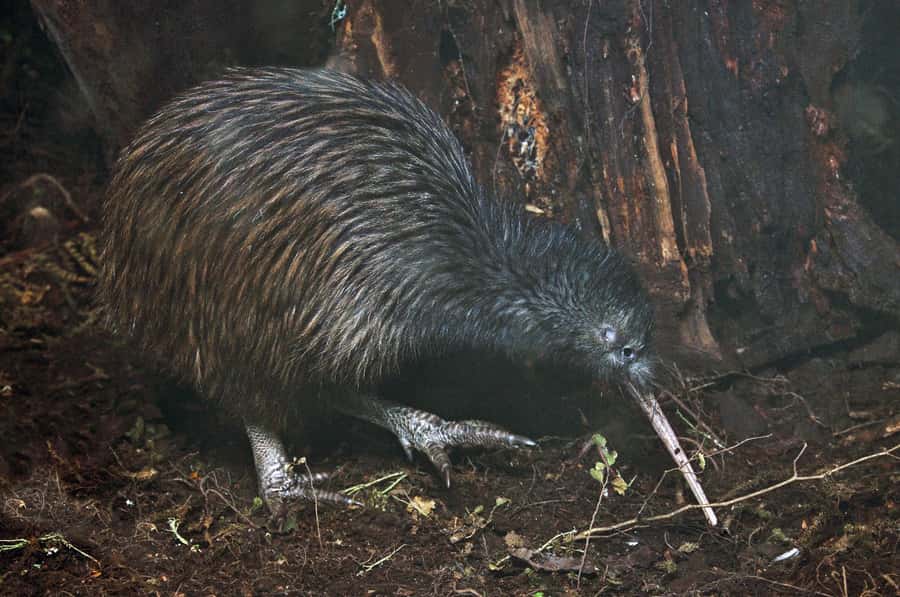
A wild kiwi is not a staged wildlife encounter. At Tāwharanui, you move slowly through native bush, listen for calls, and wait for a quick shape to emerge from the dark. Some nights produce two or three birds, while particularly lucky groups have seen seven, ten, or even more. Seeing a kiwi in its natural habitat is the main prize, but patience is part of the deal.
I like two things especially: the guides bring real skill to a difficult search, and the park gives you a second show overhead, with stars, planets, and Māori sky stories. The main drawback is clear enough: kiwi are wild, fast, and never guaranteed. Cloud can also cancel the stargazing portion, so book this for the whole night experience, not a promised bird count.
Key points
- Wild kiwi in a protected park: Search for North Island brown kiwi in the bush rather than viewing birds in an enclosure.
- A slow two-hour walk: The pace is deliberate, with time to listen, scan, and follow signs of kiwi activity.
- Excellent guides: Guides including Legend, Chris, Millie, Sean, Lucas, Ryan, and Hayley have led searches and shared local wildlife and Māori astronomy.
- Dark skies near Auckland: Tāwharanui offers a rare coastal setting away from much of the city’s artificial light.
- Equipment supplied: Torches, headlamps, and stargazing equipment are included, with binoculars or a telescope used on some outings.
- Optional transport and glamping: You can add transport from Auckland and select an overnight setup, but food, drinks, campsite booking, and campsite fees are separate.
Why Tāwharanui is a strong place to look for kiwi
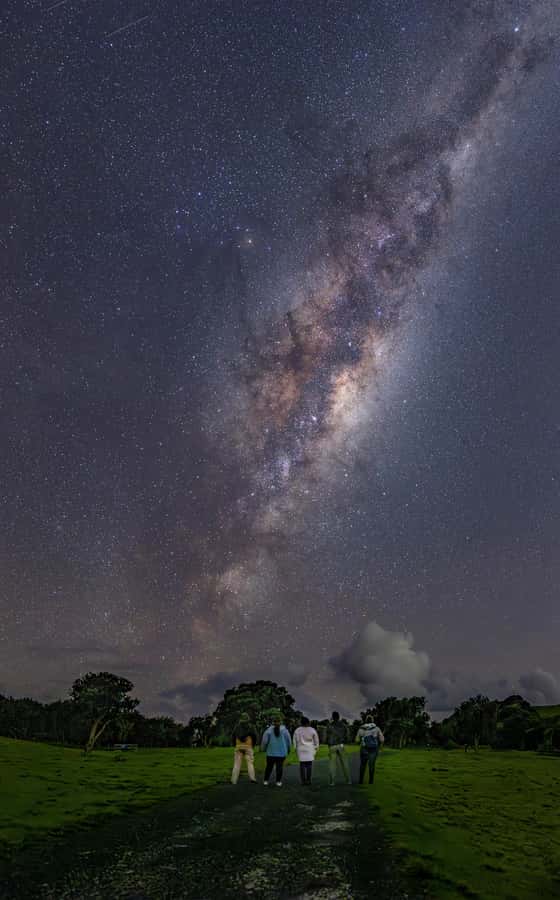
Tāwharanui Regional Park sits on the North Island coast, a scenic drive north of Auckland. Its protected setting supports native bush, open areas, and a conservation program aimed at restoring local wildlife. That matters here because the point is not simply to see a kiwi. You are seeing what protection can make possible.
The meeting point is near the public bathrooms at the end of Takatu Road, inside the park. This is practical rather than glamorous, so arrive ready for an outdoor activity. If you add transport, pickup from Auckland can make the outing much easier, especially since the late return may be around 2 AM according to one reported transport experience.
At the start, your guide explains the plan, basic safety, and the park’s wildlife. This short introduction gives you useful context before the lights go low. You learn what to listen for, how to walk without making needless noise, and why everyone needs to give the birds space.
The park’s setting also creates a useful contrast with Auckland. You do not need to drive to a remote national park for a dark night sky, but you do need to leave the city center behind. The coast and distance from strong city lighting give the sky a much better chance to show stars clearly.
A few more Auckland trips worth comparing
- Private tour from Auckland – Waitomo Glowworm Caves, Zealong Tea & Kiwi Bird
★ 5.0 · 20 reviews - Twilight Wild Kiwi Bird Encounter Private Tour
★ 5.0 · 3 reviews
The first hour: slow steps, quiet ears, and trained eyes
Kiwi spotting is not a standard walk with a fixed series of stops. Your guide leads the group through native bush and open sections, checking areas where birds may be active. You might pause for several minutes, move a short distance, then stop again.
This pace can feel slow at first. One group described the search as starting quietly, with the birds seeming to avoid them, before six or seven appeared later. That is a useful picture of the experience. You are not marching from one attraction to another. You are giving the night time to reveal itself.
A guide may help by listening for calls, scanning the track edges, watching for movement, and using equipment suited to dark conditions. You might see only a brief shape, a quick bird moving through vegetation, or a kiwi that stays visible for several moments. Some groups have seen a male and female together, a young bird, or several birds spread along the track.
The guides are a major part of the value. Legend is repeatedly singled out for his energy, local stories, and ability to locate birds. Chris and Millie have led outings together, while Sean, Lucas, Ryan, and Hayley have also guided groups. The exact guide depends on the date, but the strongest reports point to a team that knows how to keep the mood relaxed while staying focused on the search.
You will also learn about the kiwi’s behavior, habitat, and threats. That turns a quick sighting into something more meaningful. You begin to understand why the bird is nocturnal, why it moves so quickly, and why conservation work is needed to keep wild populations safe.
What you may see besides kiwi
The kiwi is the headline, but it is not the only wildlife element. The dark bush may carry calls from ruru, the morepork, and other night creatures. One outing included time listening to kiwi and ruru calls as the group moved through the reserve.
Your guide may also point out insects and plants. One guide shared information about plants used as medicine, while other outings included discussion of the park’s wider wildlife and ecosystems. These details reward people who enjoy natural history, even if a kiwi remains hidden.
The experience is also a lesson in restraint. You are not promised close contact, feeding, or a staged photo opportunity. The goal is to watch the birds in a respectful way. That may mean accepting a short glimpse rather than chasing a better view.
Photography can be tricky. Several reports describe kiwi as quick, and the darkness makes sharp pictures difficult. Bring your phone if you like, but do not make a good photograph the measure of success. A clear look at a kiwi’s shape and movement can be the best souvenir.
The group format affects the search. Private or small-group options are available, and smaller numbers should make it easier to stay quiet and keep the guide’s attention on the search. Larger groups may still work well, but the activity depends on everyone following instructions and limiting noise.
Stargazing after the bush walk
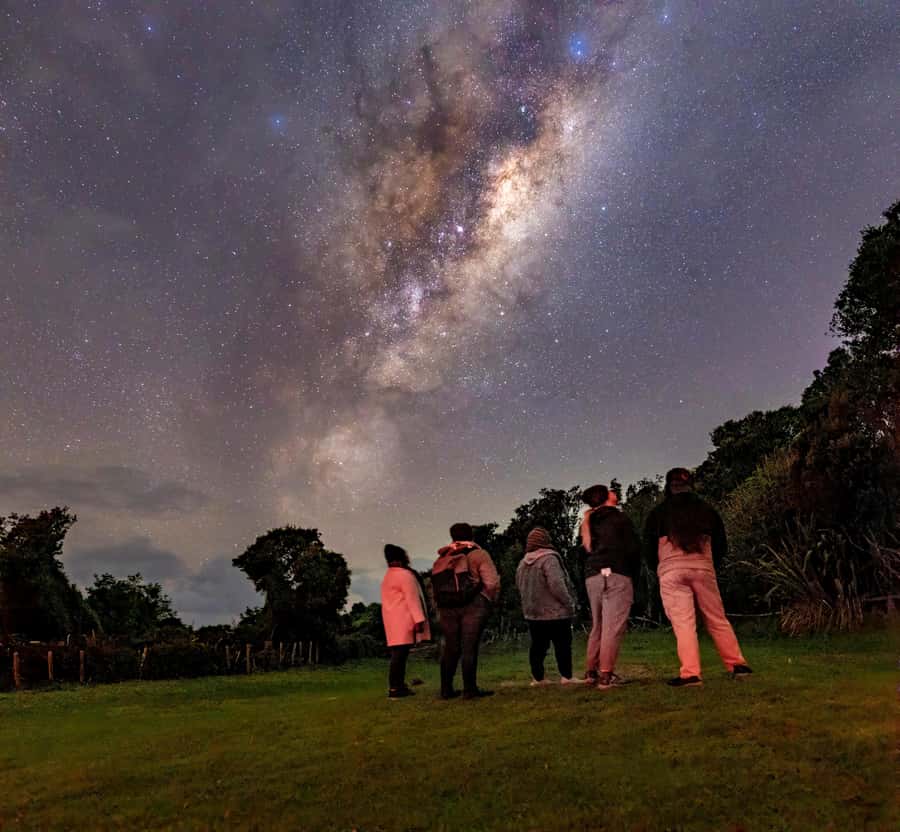
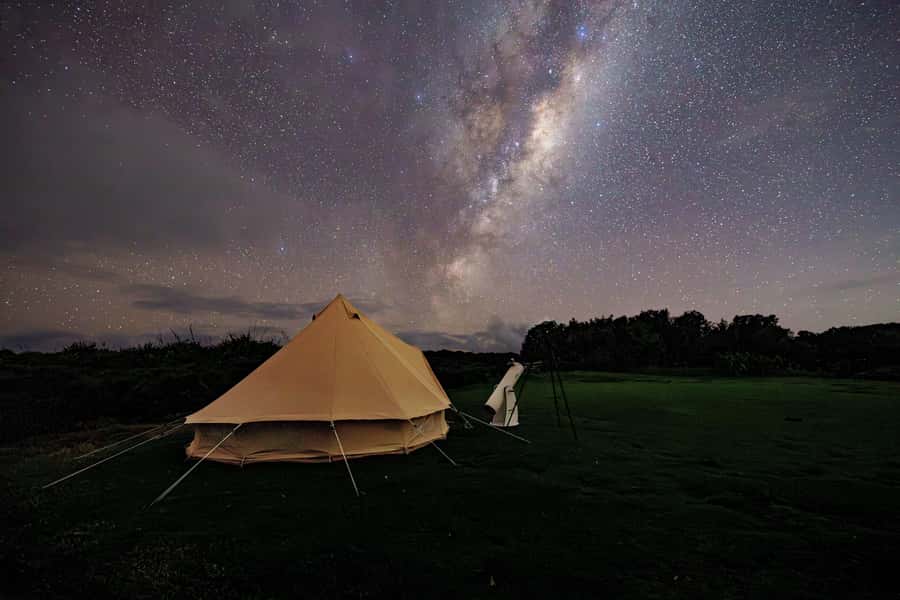
When full darkness arrives, the focus may shift upward. Tāwharanui’s low light pollution can reveal dense star fields, planets, and seasonal constellations that are hard to see from Auckland. The guide explains what you are looking at rather than simply pointing out a few bright objects.
The stargazing has earned strong praise when conditions cooperate. Groups have used a telescope to see the Moon’s craters and have viewed Venus, Jupiter, and Saturn. Binoculars and a telescope may be available, along with other stargazing equipment included in the outing.
I especially like the cultural side of this part of the evening. Guides have shared Māori stories and Māori astronomy, connecting the sky with navigation, place, and tradition. That gives the stargazing more character than a quick list of planets.
Still, sky conditions control this part of the experience. One group had heavy cloud and spent the time kiwi spotting instead. Another had a slightly cloudy sky but still found several stars and planets. You should treat the astronomy as weather-dependent, not as a guaranteed second performance.
The order may also change. If the sky is clear, the guide may give more time to stargazing. If clouds cover the stars, the search can stay focused on wildlife. This flexibility is useful because it prevents a poor sky from ruining the entire night.
Same drive out of the city, a very different day:
- Waiheke Island: Ferry & Hop-On Hop-Off Explorer Bus Tickets
★ 4.6 · 3,311 reviews - Hobbiton & Waitomo Caves Guided Day Trip from Auckland incl lunch
★ 5.0 · 2,677 reviews - From Auckland: Hobbiton & Waitomo Caves Day Trip with Lunch
★ 4.9 · 2,505 reviews - Auckland Dolphin and Whale Watching Eco-Safari Cruise
★ 4.5 · 1,790 reviews
The optional glow along the shore
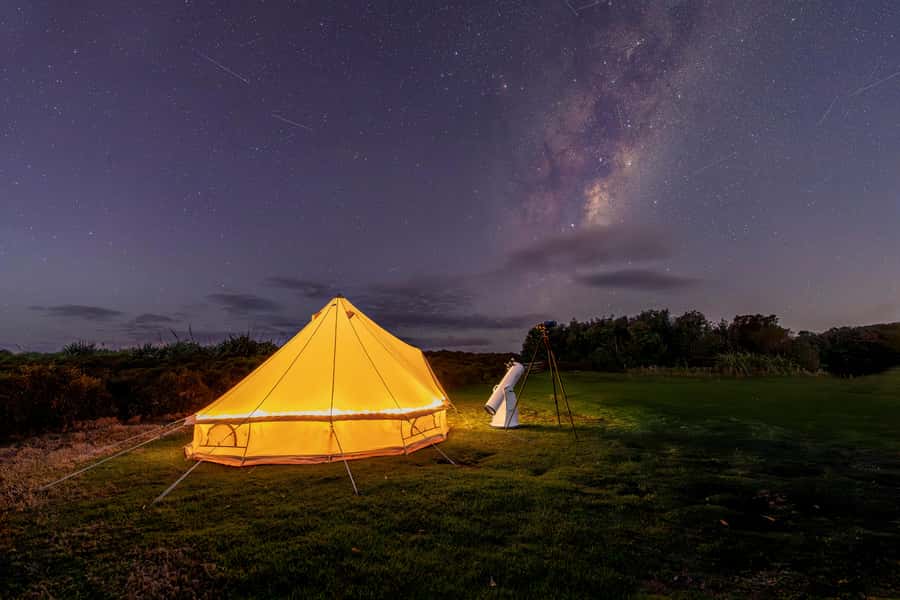
In suitable conditions, you might see bioluminescence near the shoreline or in shallow water. Small movement in sand or water can produce a soft blue glow from microscopic organisms.
This phenomenon is not guaranteed, and it should be treated as an extra rather than a main reason to book. Weather, water conditions, and timing all matter. When it appears, though, it adds another natural light show to an evening already built around darkness.
The guide explains how glowing marine organisms create the effect. That explanation helps you see the shoreline as part of the night’s ecology rather than just a scenic stop. If the glow does not appear, the kiwi search and sky viewing remain the core activities.
What the two-hour format really means
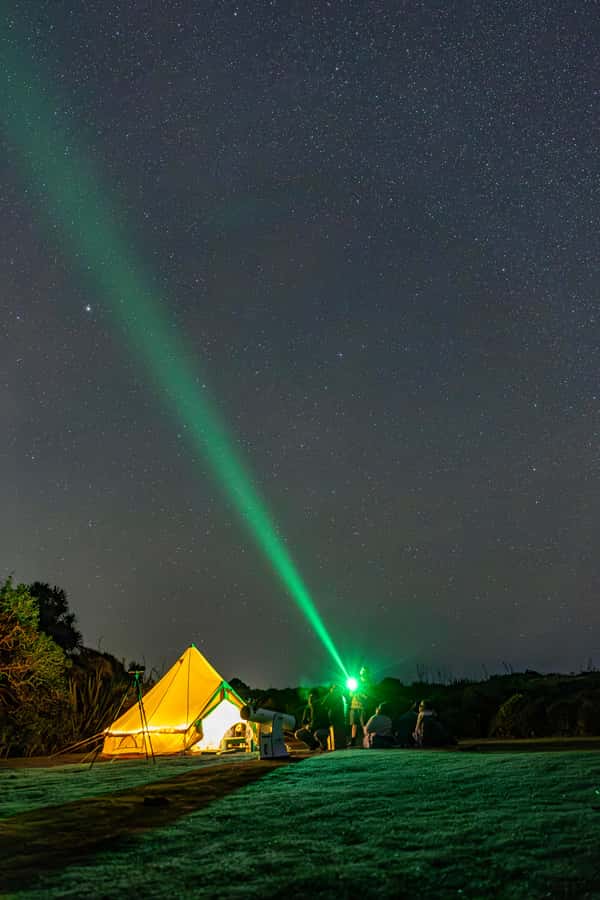
The advertised activity lasts two hours, but the practical evening can feel longer depending on transport, the group’s pace, and optional overnight arrangements. The central guided walk covers roughly two hours, followed by additional sightseeing or stargazing time in some schedules.
You should be comfortable standing and walking slowly after dark. The route is described as a guided walk through bush and open habitat, but no detailed distance or accessibility information is provided. Comfortable shoes are important, and warm clothing matters even in warmer months.
The night can feel cold, particularly in winter or when you are standing still while waiting for a bird. Bring water and dress in layers. A reported winter outing included hot chocolate, but this is not listed as a standard inclusion, so do not depend on a drink being provided.
Transport is optional and can be added at checkout. If you do not have a car, this is a useful choice because Tāwharanui is outside Auckland’s center and the return is late. If you drive, follow the meeting instructions carefully: the gathering point is near the public bathrooms at the end of Takatu Road.
Price and what you get for $89

At $89 per person, this is not the cheapest evening activity around Auckland. The price makes more sense if you value expert wildlife finding, a small-group format, and the chance to see a wild kiwi rather than a captive one.
Your fee includes a guide and kiwi-spotting and stargazing equipment. That saves you from buying or carrying special night gear, and the guide’s ability to locate birds is the part you could not easily reproduce on your own.
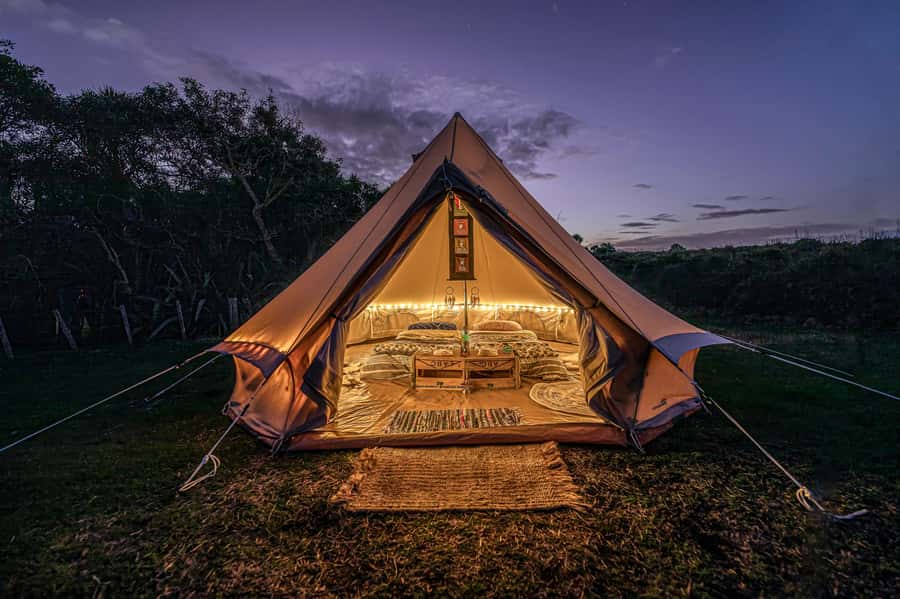
Transport costs extra, as do food and drinks. Campsite booking and campsite fees are also separate. A glamping stay can be selected as an option, but you should check exactly what is included before paying for it. The available information describes a prepared tent with blankets, foam mattresses, small snacks, and basic necessities for at least one overnight setup, but this should not be assumed for every booking type.
The value depends heavily on your expectations. If you need a guaranteed close-up kiwi photograph, the price may feel risky. If you want a careful introduction to the park’s nocturnal life and accept that wildlife sets the schedule, $89 is reasonable.
Adding the overnight glamping option
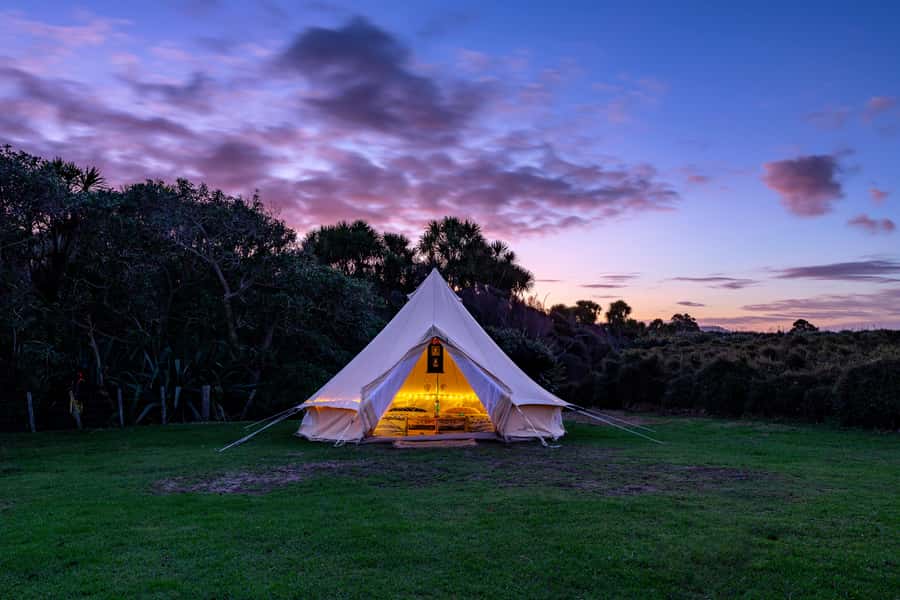
The overnight option changes the shape of the outing. Instead of returning straight to Auckland after the night walk, you can stay at or near the park with a glamping setup if that option is selected.
This can be useful after a late finish. You avoid a long drive when you are tired, and you have more time to enjoy the area at a gentler pace. One setup included blankets, foam mattresses, small snacks, and other basic items, but the campsite booking and fees are not included in the basic activity price.
Do not confuse glamping with a full meal or hotel stay. Bring or arrange extra food and drinks, and confirm the camping details before booking. The overnight arrangement is best for people who want to make a full evening of the visit, not for someone seeking only a quick wildlife activity.
Who should book this experience
I would choose this outing if you are excited by wildlife but understand that wild sightings involve uncertainty. It suits families with older children, couples, solo nature lovers, and anyone who wants something less polished than a standard city attraction.
Children can enjoy it, but they need to manage quiet walking and waiting. One family took a nine-year-old who loved seeing kiwi in the wild, and another group included an 11-year-old. The experience will work best when children are genuinely interested in animals and can follow the guide’s instructions.
It also suits people who enjoy astronomy. The stargazing may be a highlight on a clear night, especially if you have never seen the Southern Hemisphere sky away from city lights. The Māori astronomy stories add a local layer that a basic telescope session would not provide.
You may want to skip it if you dislike darkness, cold, slow walks, or uncertain results. You should also reconsider if you need step-free access or a precisely defined route, since the supplied details do not describe accessibility or terrain in enough detail to promise either.
Practical preparation for a better night
Wear warm layers even if the Auckland afternoon feels mild. Bring comfortable shoes and water, and expect to spend time outside in dark conditions.
Keep your light use under control and follow the guide’s directions. Torches and headlamps are supplied, but the purpose of the equipment is to help with safe movement and careful spotting, not to flood the bush with bright beams.
Arrive with patience. You might see a kiwi early, then find several more in quick succession. You might wait a long time for one good look. Both are normal outcomes for a wild animal encounter.
Check the weather before you leave, but do not assume clouds mean the night is lost. The guide can adapt the evening, spending more time on kiwi if the stars are hidden. Clear conditions simply give you more of the park’s night sky.
The activity offers free cancellation up to 24 hours before the start, and you can reserve now and pay later. Starting times vary, so check availability for your date rather than assuming a fixed departure.
Should you book the Tāwharanui kiwi walk?
Book it if seeing a wild North Island brown kiwi is high on your New Zealand list and you can accept that nature does not follow a timetable. The guide team, supplied equipment, dark coastal setting, and strong record of sightings make this one of the more rewarding wildlife outings near Auckland.
Book the transport option if you do not have a car or do not want to drive back late. Consider glamping if you want to avoid the return journey and enjoy a slower overnight visit, but budget separately for food and campsite costs.
Skip it only if you need guaranteed sightings, dislike waiting, or want a short and predictable evening. For everyone else, the combination of kiwi, ruru calls, stars, Māori sky stories, and the possibility of blue shoreline glow gives you a memorable night without pretending that wild animals are on cue.
FAQ
Where does the kiwi spotting experience meet?
Meet near the public bathrooms at the end of Takatu Road in Tāwharanui Regional Park.
How long does the main activity last?
The guided kiwi-spotting walk lasts about two hours. Some schedules also include additional sightseeing, stargazing, or overnight arrangements.
How much does the experience cost?
The listed price is $89 per person.
Is transport from Auckland included?
No. Transport is not included in the base activity, but it can be added at checkout.
What equipment is provided?
The experience includes kiwi-spotting and stargazing equipment. Reported outings have used torches, headlamps, binoculars, and a telescope.
Are kiwi sightings guaranteed?
No. Kiwi are wild animals, so sightings depend on weather, conditions, and wildlife activity.
Is stargazing guaranteed?
No. Stargazing depends on the sky. Cloudy conditions can limit or prevent views of stars and planets.
Can I stay overnight?
An overnight glamping stay is available if you select that option. Campsite booking and campsite fees are not included, and extra food and drinks are also separate.
What should I bring?
Bring comfortable shoes, warm clothing, and water.
Can I cancel the booking?
You can cancel up to 24 hours in advance for a full refund. Reserve now and pay later is also available.
Recently added around Auckland
- Waiheke Island: Gulf Marine Park Sailing Adventure & Lunch★ 5.0 · 4 reviews
- Waiheke Island: Scenic PREMIUM Wine Tour. Max 11 clients★ 4.9 · 8 reviews
- Flavours of Waiheke, wine, beer, spirits INCLUDES lunch – MAX 11★ 5.0 · 9 reviews
- Waiheke Island: Premium Vineyard, Wine Tasting and Bush Walk★ 5.0 · 4 reviews
- Heke Brewery and Distillery Tour in Waiheke Island with samples★ 4.5 · 3 reviews
- Waiheke Island Private Double Headland Walk★ 5.0 · 5 reviews
- Waiheke Island Private Art Tour★ 5.0 · 5 reviews
- Waiheke Island Private History and Heritage Tour★ 4.5 · 7 reviews