
Reviewed · TE PUIA AND MAORI CULTURAL TOURS
Luxury Auckland & West Coast Day Tour with Maori Guide
A local Maori guide gives this Auckland day tour its real point of difference. You get the city’s best viewpoints, harbour scenery, historic places, and rugged west coast in one full day, while the stories connect the land to Maori culture and modern Auckland. I especially like the personal cultural perspective and the sharp contrast between the calm Waitemata Harbour and the stormy Tasman coast.
I also like that lunch, snacks, hot and cold drinks, taxes, and park fees are included. That makes the $231 price easier to judge. The tradeoff is time: you cover a lot of ground in eight hours, so this is a broad introduction rather than a slow visit at every stop. If you want long beach walks or extended time in one museum, choose a more focused outing.
Key points to know before booking
- Maungawhau gives you a powerful opening view over Auckland, the Pacific Ocean, and the Tasman Sea.
- The Maori guide shapes the day, with culture and local history explained through stories rather than a standard script.
- Devonport adds a relaxed village stop, with cafes, boutiques, harbour views, and views of Takarunga.
- The Wild West Coast is the dramatic half, with cliff tops, black sand, crashing surf, and open ocean.
- Arataki Visitor Centre is a useful viewpoint, looking across Manukau Harbour toward Auckland’s west.
- The tour includes food and drinks, with pickup from central Auckland hotels, the SkyTower, or the cruise port.
Why this Auckland tour feels different
Many Auckland day tours split the city and the west coast into separate outings. This one links them. You begin with volcanic hills, waterfront roads, and harbour views, then head into Titirangi and out toward the black sand beaches of the west.
That change matters. Auckland can seem polished and urban from the centre, but its identity is tied to the water, volcanic cones, forests, and coast. The tour gives you several versions of the city in one day.
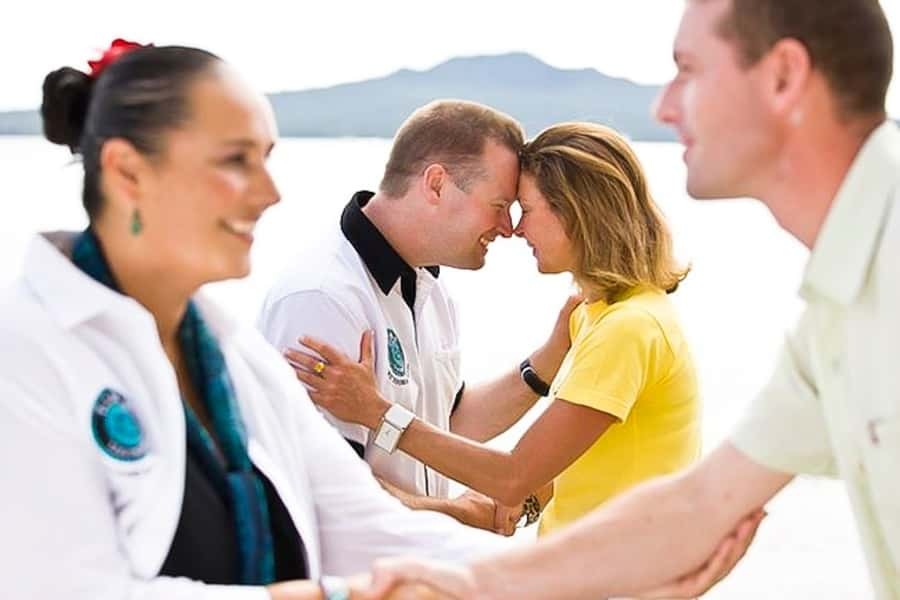
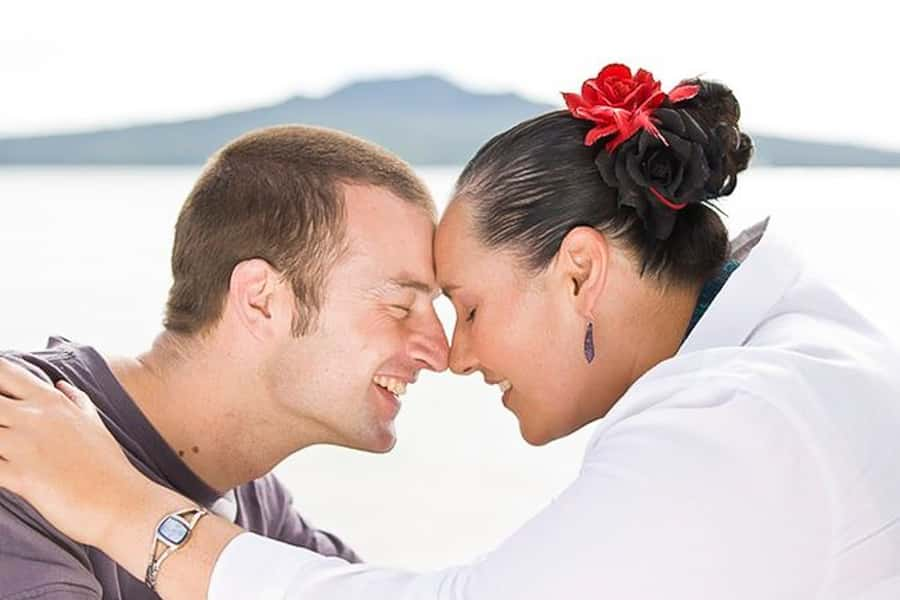
The Maori guide adds a second layer. You are not simply told that a hill, harbour, or forest is important. You get the chance to hear how the region’s people, plants, and past connect. The exact guide can vary, but Harry and Cathy are two guides specifically praised for clear storytelling and a warm cultural approach.
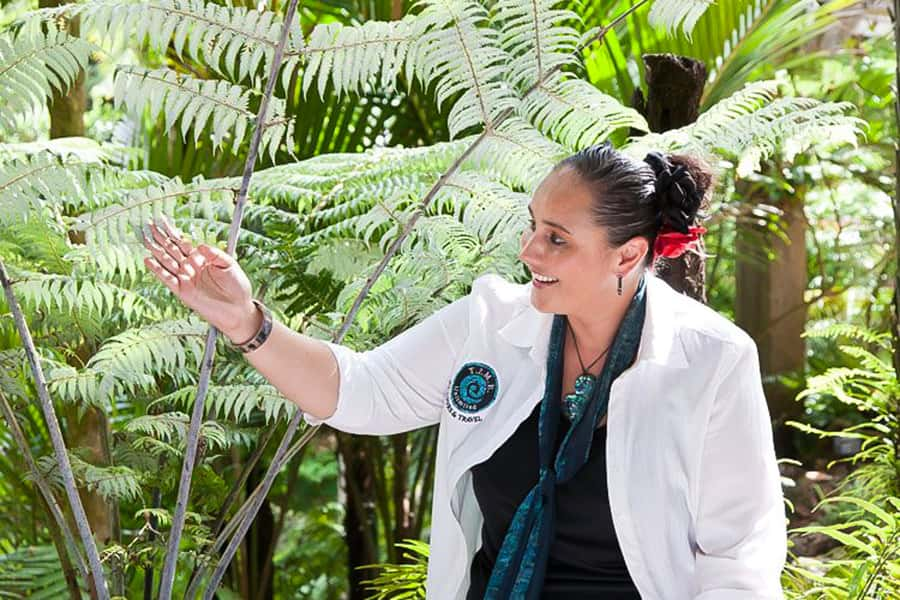
Cathy’s style, in particular, included a small-group introduction ritual, plant identification, tastings of local delicacies, and the chance to see singing, dancing, and haka in a museum setting when available. Those details show what makes the tour more than a sightseeing drive. The experience can make Maori culture feel present and human, not like a short paragraph added between photo stops.
More Maori cultural experiences:
- Waitomo Caves & Rotorua – Te Puia Small-Group Tour from Auckland
★ 4.5 · 681 reviews - Auckland: Waitomo Caves & Rotorua – Te Puia Small-Group Tour
★ 4.8 · 223 reviews - Hobbiton & Rotorua Small Group Tour including Te Puia from Auckland
★ 5.0 · 190 reviews
Maungawhau begins the day above Auckland
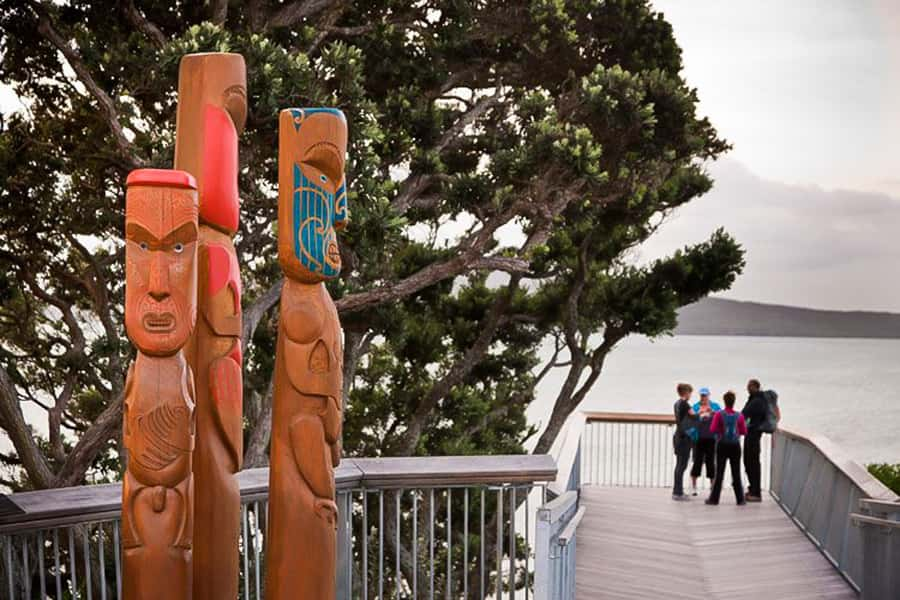
The first major stop is Maungawhau, one of Auckland’s famous volcanic sites. From its higher ground, you can look across the city and out toward both the Pacific Ocean and the Tasman Sea.
This is a smart place to begin. Auckland’s layout makes more sense from above. You can see the water that shapes the city, the volcanic cones that mark its past, and the broad spread of urban neighbourhoods.
Bring walking shoes. The tour does include stops where you get out and walk, and the first viewpoint is more rewarding when you are ready to move around instead of staying beside the vehicle. Your camera will get plenty of use here, but give yourself time to listen as well. The guide’s explanation of the area is part of the stop.
The visit is also a reminder that Auckland is not just a modern Pacific city. Its volcanic sites and coastal position help explain why the area mattered to Maori communities and later settlers. The guide can place those changes into a local story rather than presenting them as disconnected facts.
Parnell and Tamaki Drive show Auckland’s softer side
After Maungawhau, the route continues through colonial Parnell and along Tamaki Drive. This section changes the mood. Instead of high viewpoints and open volcanic ground, you get older streets, waterfront scenery, and views across the harbour.
Tamaki Drive is one of Auckland’s most pleasant roads. Along the way, you see beaches on the city shoreline, the Waitemata Harbour, the Hauraki Gulf, and Rangitoto, the island volcano that gives the skyline much of its character.
You also get a look at the Harbour Bridge. It is not a dedicated bridge tour, but seeing it in relation to the water, city, and gulf helps you understand Auckland’s geography quickly.
The main drawback is that this is a moving sightseeing route, not a long waterfront walk. You will stop at selected viewpoints, but the day’s schedule must also leave room for the west coast. If Tamaki Drive is your top priority, a separate city tour may give you more time on foot.
Still, I like this part because it places the later coastal scenery in context. You first see Auckland as a harbour city before the tour takes you to the rougher edge of the island.
Devonport offers a compact village break
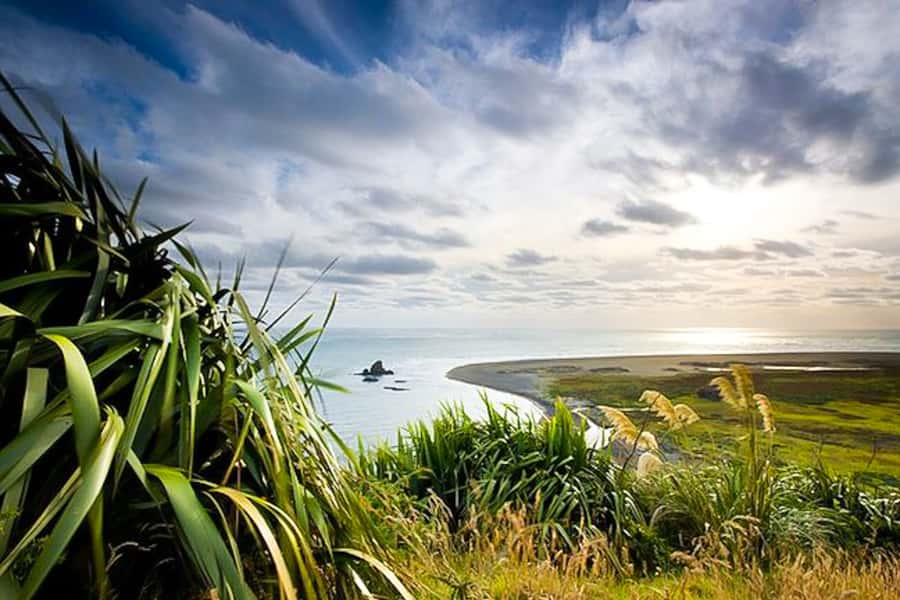
Devonport is one of the more appealing stops for anyone who likes a little free time in a pleasant town setting. It is described as a marine village, with cafes, boutiques, and views of Takarunga and Auckland city.
The stop gives the day some breathing room. After several viewpoints and historical explanations, you can enjoy a different pace. Look across the water, browse the small shops, or have a coffee if time allows. The exact amount of free time is not stated, so do not plan a full shopping session or a long meal here. Lunch is already included as part of the tour.
Takarunga provides another reminder that Auckland’s volcanic cones are not isolated sights. They appear again and again in the city’s views, linking neighbourhoods, harbour routes, and Maori history.
Devonport is also useful for comparing Auckland’s shores. The Waitemata side feels sheltered and urban. Later, the west coast will feel exposed, wild, and much less settled. That contrast is one of the strongest reasons to choose this particular route.
More west coast beach trips:
- Afternoon Piha Beach and Rainforest Tour from Auckland
★ 5.0 · 807 reviews - Piha Waitakere Rainforest Wine Tour from Auckland
★ 5.0 · 201 reviews - Auckland City Highlights, Afternoon Piha Beach & Rainforest Tour
★ 5.0 · 134 reviews - Muriwai Scenic Wine Tour from Auckland
★ 5.0 · 118 reviews
Titirangi leads you into the western ranges
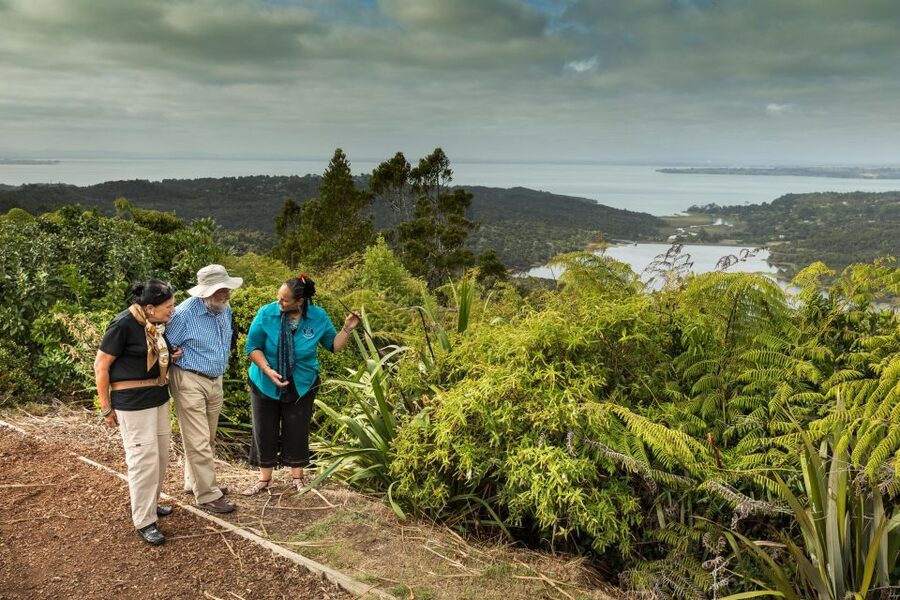
The second half of the day heads toward Titirangi, known as the Fringe of Heaven. It is an artist enclave on Manukau Harbour, and it marks the shift from central Auckland to the forested west.
Titirangi is not presented as a long gallery visit or a shopping stop. Its value is the setting and the sense of transition. The road begins to feel greener and less urban, and the harbour opens another angle on the region.
The route then reaches the Arataki Visitor Centre, described as the gateway to Auckland’s west coast. From here, you get wide views across Manukau Harbour. This is an important orientation point because the west coast is not only about beaches. It is also about the relationship between harbour, forest, ridges, and open sea.
At Arataki, listen closely to the guide’s explanation of the native plants and the area’s cultural importance. The tour includes park fees, so you do not need to budget extra for the listed access costs.
The Wild West Coast brings the biggest scenery
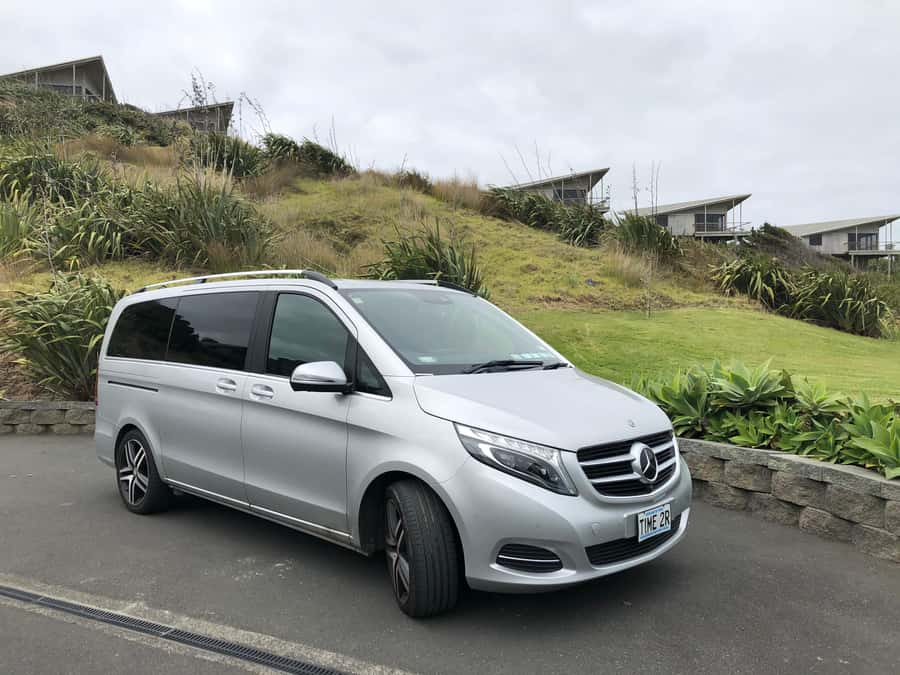
The coast is the visual high point of the day. You can expect soaring cliffs, wide ocean views, roaring surf, and black sand beaches. The shore faces the Tasman Sea, and the mood is much more forceful than the sheltered harbour views earlier in the tour.
Black sand is one of the west coast’s memorable features. It comes from volcanic material and gives the beaches a darker, more dramatic look. You should not expect a gentle resort beach day. The description stresses stormy seas, cliffs, and surf, so pack for scenery and short walks rather than a long swim.
Swimming gear is recommended in summer, but that does not mean swimming is guaranteed or central to the tour. Bring it if you want the option, but treat the coast first as a place for views, fresh air, and photographs.
Sun protection also matters. New Zealand’s light can feel mild while the sun remains strong, especially at exposed viewpoints. A sun hat, sunscreen, and walking shoes are sensible additions to your day bag.
The west coast can also be less predictable than the city. If the weather turns, the cliffs and sea may feel even more dramatic, but visibility can change. The tour still offers forest, harbours, and cultural storytelling, so the day is not dependent on one perfect beach view.
Kauri and pohutukawa add a living history lesson
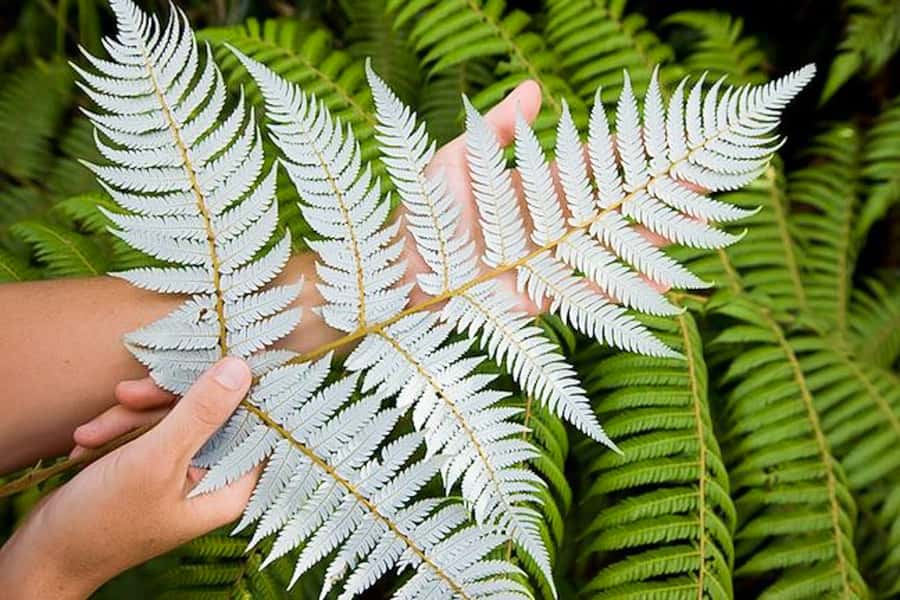
Ancient native rainforest appears along the western route. The tour highlights kauri trees and pohutukawa trees, the latter known for crimson flowers.
This is where the guide’s knowledge can make a real difference. A quick glance at a large tree is pleasant. Learning why native plants matter, how people use them, and how they fit into Maori culture gives the forest more meaning.
The plant element is not just a bonus detail. One account of the experience describes stopping to examine plants and taste local delicacies. That sort of hands-on moment can stay with you longer than a list of dates because it ties culture to ordinary things you can see, touch, and taste.
The forest also breaks up the viewpoints. Eight hours of riding between lookouts can feel repetitive, but the combination of rainforest, coast, village streets, harbours, and volcanic sites keeps the route varied.
How the Maori guiding shapes the day
The strongest part of this experience is the way the guide connects places to people. The tour focuses on Auckland as the world’s largest Polynesian city and on its mix of cultures from across the Pacific.
That does not mean every stop becomes a formal cultural performance. Instead, the guide can explain the region’s indigenous past and present while you move through the city and countryside. The experience with Cathy included a relaxed introduction ritual adapted to a small group, plus stories about Maori culture and the social situation of Maori people.
Harry was also praised for making New Zealand history clear while showing unusual places. Those details suggest that the guiding style is a major part of the value. Since the guide may not be Harry or Cathy on your date, you should regard those names as examples rather than a guarantee.
I like that questions are welcomed. A small-group setting makes it easier to ask about a place, a plant, a ceremony, or a local custom without feeling as if you are interrupting a large lecture.
The cultural material is one reason this tour suits curious first-time visitors. It gives you a foundation for later visits to museums, cultural centres, or other parts of New Zealand. It also avoids reducing Maori culture to a single haka or staged moment.
What the $231 price includes
At $231 per person, this is not a budget sightseeing bus. The value comes from the amount packed into the day and the fact that several costs are already covered.
You receive:
- Eight hours of touring
- Pickup from selected central Auckland hotels, the SkyTower, or the cruise ship port
- A local Maori guide
- Lunch and snacks
- Hot and cold drinks
- Taxes and park fees
For a visitor based in central Auckland, pickup saves you the trouble of finding the meeting point. Cruise passengers may also find the port pickup useful, though you should confirm the timing when booking because the tour lasts a full eight hours.
The included food and drinks help. You are not constantly stopping to buy refreshments, and there are no hidden costs or souvenir shop stops built into the experience. That last point matters if you prefer a day focused on scenery and culture rather than shopping.
The price makes the most sense if you want both city and coast but do not want to rent a car. It is also reasonable for someone who values a guide who can interpret the region, not just drive between viewpoints.
Who should book this day tour
I would choose this tour if you have one full day in Auckland and want a strong first look at the region. It works especially well for:
- First-time Auckland visitors
- Cruise passengers with a full day available
- People interested in Maori culture and local history
- Visitors who want both harbour views and the west coast
- Anyone who prefers an included lunch and drinks
- Small groups looking for a more personal guide
It may not suit you if your main goal is a long hike, extended time on a black sand beach, or a slow afternoon in Devonport. The route covers many places, so stops are selected rather than lengthy.
The tour also requires at least two adults to operate. Single-passenger bookings may be possible, but you need to ask before relying on the date.
Cancellation is flexible up to 24 hours before departure for a full refund. Bring walking shoes, a camera, sunscreen, a sun hat, and swimming gear in summer.
Should you book the Auckland and West Coast tour?
Book it if you want Auckland explained through its land, water, and people in one well-filled day. The best parts are the Maori guide, the sharp contrast between the two coasts, the views from Maungawhau and Arataki, and the chance to see black sand beaches without arranging your own transport.
Skip it if you want a slow, single-area outing. You will cover a lot of ground, and some stops are viewpoints rather than long visits.
For most first visits, the route offers good value at $231 because transport, food, drinks, park fees, and guiding are included. Just pack for changing conditions and arrive ready for a full day of scenery, stories, and steady movement.
FAQ
How long is the Auckland and West Coast tour?
The tour lasts eight hours.
What locations are included?
The route includes Maungawhau, colonial Parnell, Tamaki Drive, Auckland’s shoreline, Waitemata Harbour, the Hauraki Gulf, Rangitoto, the Harbour Bridge, Devonport, Titirangi, Arataki Visitor Centre, the west coast cliffs, black sand beaches, and native rainforest.
Is pickup included?
Yes. Pickup is available from downtown Auckland hotels, the SkyTower, or the cruise ship port.
What food and drinks are included?
Lunch, snacks, and hot and cold drinks are included.
Is the tour led in English?
Yes. The instructor and tour language are English.
Does the tour include Maori cultural information?
Yes. A local Maori guide shares information about Maori history and culture from a personal perspective. The guiding may include stories, plant information, tastings, or a cultural introduction, depending on the guide and day.
What should I bring?
Bring walking shoes, a sun hat, sunscreen, and a camera. Swimming gear is also recommended in summer.
Can I cancel for a full refund?
Yes. You can cancel up to 24 hours in advance for a full refund.
Recently added around Auckland
- Waiheke Island: Gulf Marine Park Sailing Adventure & Lunch★ 5.0 · 4 reviews
- Waiheke Island: Scenic PREMIUM Wine Tour. Max 11 clients★ 4.9 · 8 reviews
- Flavours of Waiheke, wine, beer, spirits INCLUDES lunch – MAX 11★ 5.0 · 9 reviews
- Waiheke Island: Premium Vineyard, Wine Tasting and Bush Walk★ 5.0 · 4 reviews
- Waiheke Island Private Double Headland Walk★ 5.0 · 5 reviews
- Heke Brewery and Distillery Tour in Waiheke Island with samples★ 4.5 · 3 reviews
- Waiheke Island Private Art Tour★ 5.0 · 5 reviews
- Waiheke Island Private History and Heritage Tour★ 4.5 · 7 reviews
Te Puia and Maori Cultural Tours, compared.
Waitomo Caves & Rotorua – Te Puia Small-Group Tour from Auckland
Read our review →
Waitomo Caves & Rotorua – Te Puia Small-Group Tour
Read our review →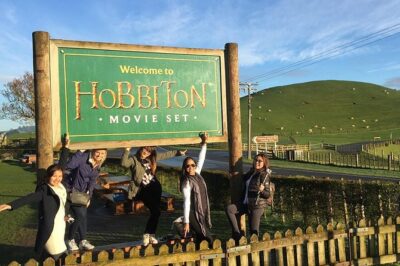
Hobbiton & Rotorua Small Group Tour including Te Puia from Auckland
Read our review →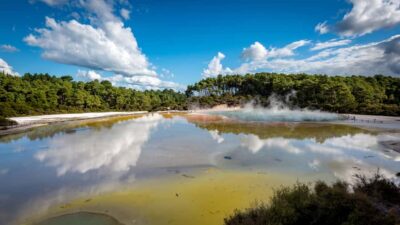
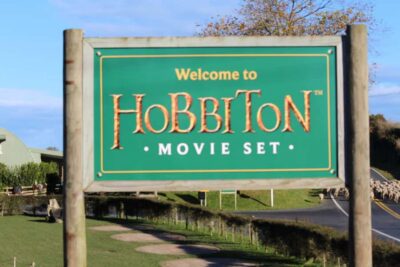
Hobbiton and Rotorua Day Tour including Te Puia
Read our review →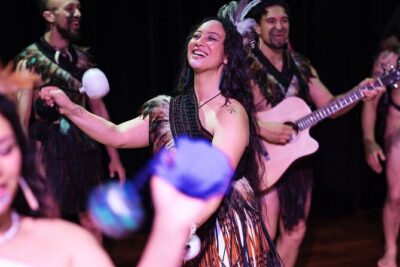
Māori Cultural Experience & Auckland Museum General Admission
Read our review →Browse the lists this tour appears in