
Reviewed · AUCKLAND
Northern Explorer Train Journey from Auckland to Wellington
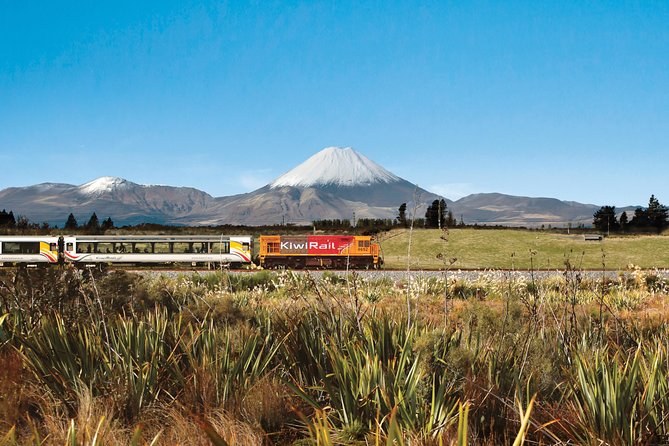
The best part of the Northern Explorer is that it lets you see New Zealand’s North Island at ground level, from Waikato farmland to the volcanic heart of Tongariro National Park. You can leave the driving behind, watch the scenery change, and make the most of the open-air viewing deck.
I like the comfortable seats and wide windows, which matter on a journey of roughly 11 hours. I also like the GPS-triggered commentary, which points out sights as you pass them, plus the chance to step outside for photographs and fresh air. The main drawback is simple: this is a very long day, and delays or an unexpected bus transfer can make it longer.
Key points to know before booking
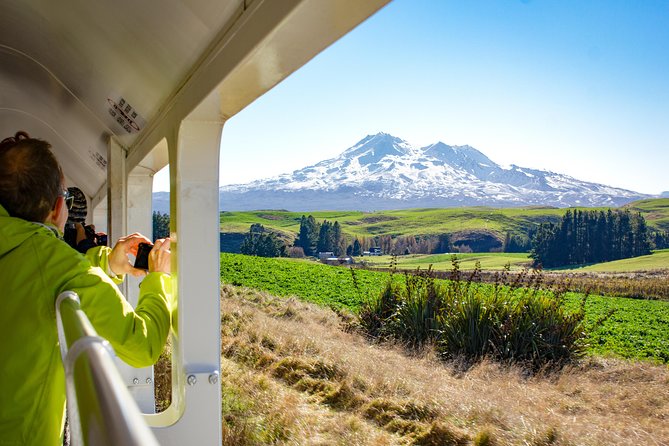
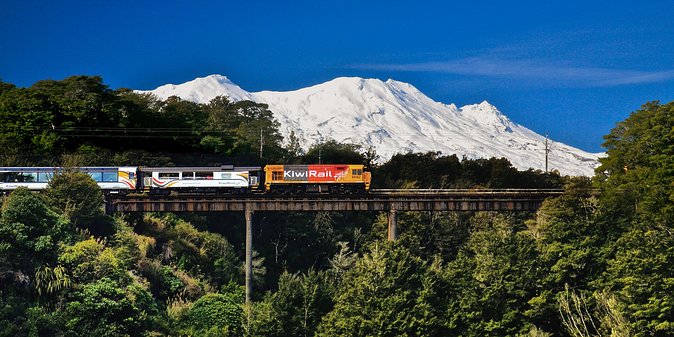
- Tongariro National Park is the scenic high point, with views toward Tongariro, Ngauruhoe, and Ruapehu.
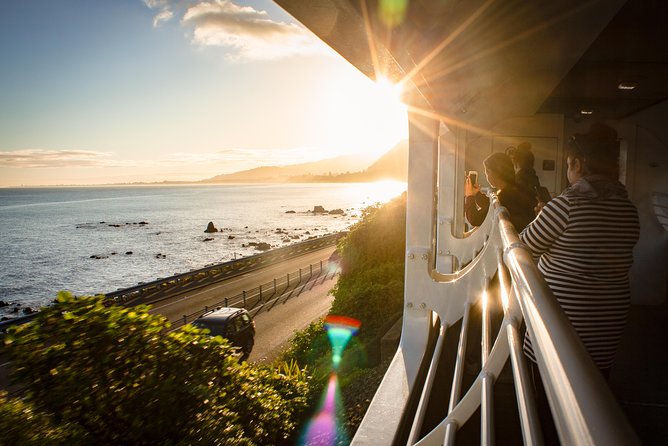
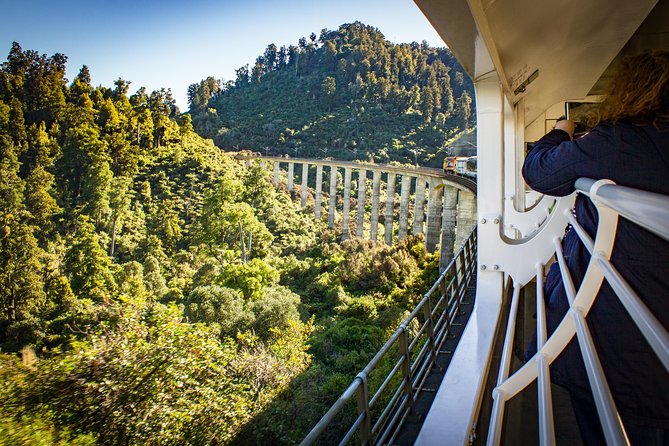
- The open-air viewing deck is worth using, especially for photographs, fresh air, viaducts, and the Raurimu Spiral.
- The café carriage sells snacks, drinks, coffee, and light meals, though service can slow when the carriage is busy.
- The full trip takes about 11 hours, so this suits you if seeing the countryside matters more than reaching Wellington quickly.
- Auckland departures can change, and some services have used a bus to Hamilton before the train begins.
- Book only if your plans can handle change, since the fare is non-refundable and cannot be amended.
Why this train journey is worth your day
The Northern Explorer is not simply a transfer between Auckland and Wellington. It is a long scenic crossing of the North Island, using rail lines that take you through places you would miss from an airplane and might not want to drive yourself.
You begin among the built-up streets of Auckland and finish at Wellington Station on Bunny Street. In between, the view shifts from green agricultural country to rugged volcanic country, river gorges, forest, and the coast. I like that rhythm. The trip gives you time to watch New Zealand change rather than presenting it as a series of quick roadside stops.
This is also a practical choice if you dislike the strain of a long drive. You can read, listen to the commentary, eat in the café carriage, talk with fellow passengers, or move to the viewing deck. You will not have the same control over stops that you get in a rental car, but you also avoid navigation, parking, and driving fatigue.
The price is listed at $164.45 per person. That is more than a basic bus fare, but the value depends on what you want from the trip. If you only need to get from Auckland to Wellington as fast as possible, flying will usually make more sense. If you want the journey itself to be part of your North Island visit, the fare pays for a full day of scenery, a reserved rail seat, commentary, and the freedom to move around.
Other Auckland days people weigh up against this one:
- Waiheke Island: Ferry & Hop-On Hop-Off Explorer Bus Tickets
★ 4.6 · 3,311 reviews - Hobbiton & Waitomo Caves Guided Day Trip from Auckland incl lunch
★ 5.0 · 2,677 reviews - From Auckland: Hobbiton & Waitomo Caves Day Trip with Lunch
★ 4.9 · 2,505 reviews
Auckland departure and the first hours south
The scheduled departure time is 7:45 am, and you should arrive at least 20 minutes early to check in and receive your boarding pass. The departure point is Auckland Strand in Parnell, close to public transportation.
One important warning: do not assume the service will always begin with the train at Auckland Strand. Planned maintenance has caused some departures to use a bus from Auckland to Hamilton, where passengers then board the train. This has been a sore point because the change was not always communicated clearly before arrival.
I would confirm the departure arrangement close to the travel date and allow extra time for check-in. If a bus connection is required, the journey may feel less romantic at the start, though the main scenic rail section still follows. Poor communication at the station can also lead to a rushed boarding process, so arrive early rather than treating 7:45 as the time to walk onto the platform.
Once the train is running south, the opening scenery is mostly rolling green farmland and country towns. This part is pleasant but not nonstop spectacle. You will pass working rural areas and settlements, with the view changing gradually instead of delivering one famous sight after another.
That slower start is part of the appeal. It gives you time to settle into the seat, test the commentary, visit the café, and learn how the viewing deck works before the most dramatic section arrives.
Waikato farmland and the changing view
The Waikato section shows the North Island as a productive rural region. Expect broad fields, gently rolling hills, and passing views of small towns and farm country. The train offers a useful contrast to an airplane here. From the air, this region becomes a patchwork below you. From the train, you see fences, roads, rivers, houses, and the small changes in the ground.
The scenery can become repetitive if you expect every minute to be a postcard. I would bring a book, headphones, or a small supply of snacks, while keeping the window seat available for the better views. You are free to move to the viewing carriage, so you do not need to stare through the same window all day.
The GPS-triggered audio commentary is available through headphones at every seat. It helps give meaning to stretches of countryside that might otherwise pass without explanation. The commentary is not a replacement for a live guide, but it is a useful companion when a point of interest appears.
Tongariro National Park and the volcanic plateau
The journey becomes much more dramatic as it reaches the Central Plateau and Tongariro National Park. This is the section to protect your energy for, because the scenery changes sharply from farmland to volcanic country.
On a clear day, you may see the three major volcanic peaks: Tongariro, Ngauruhoe, and Ruapehu. Snow-covered ground, old lava flows, and beech forest can appear within the same broad region. The contrast is striking, especially when the weather gives you a clear view of the mountains.
Weather matters here. Cloud can cover the peaks, and poor conditions may reduce the impact of the most famous section. That is not a flaw in the train, but it is a real part of planning a scenic journey. You should book this for the route and the chance of good views, not for a guaranteed mountain panorama.
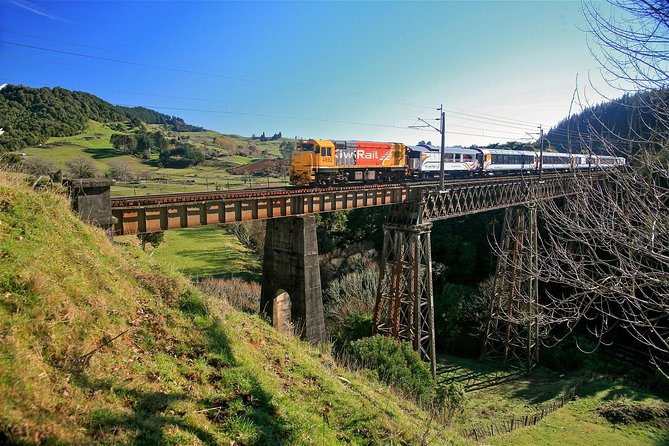
The train also passes through river gorges and crosses several viaducts. This is when the open-air viewing deck becomes especially useful. Glass windows are good for comfort and shelter, but standing outside gives you a clearer sense of the height, scale, and wind.
The deck can be busy, so be considerate with your time there. You may need to wait for a clear position for photographs, and you should bring a jacket or sweater. Conditions inside the train can also feel cool or warm depending on the air system, so layers are sensible.
Same drive out of the city, a very different day:
- Auckland Dolphin and Whale Watching Eco-Safari Cruise
★ 4.5 · 1,790 reviews - Auckland: Hobbiton Movie Set Day Trip with Festive Lunch
★ 4.8 · 1,431 reviews - Hobbiton Movie Set Small Group Tour from Auckland
★ 5.0 · 1,380 reviews - Waiheke island Wine Tours – PREMIUM wine tasting MAX 11 clients !
★ 5.0 · 1,378 reviews
The Raurimu Spiral, a railway engineering feat
Near National Park, the route follows the Raurimu Spiral, one of the most memorable pieces of railway engineering on the trip. Instead of climbing directly, the railway curves, loops, and gains height through difficult terrain.
This is a good example of why a train journey can be more rewarding than a quick flight. The route itself becomes part of the story. You are not simply looking at scenery through a window. You are watching the train work its way through a difficult section of the country.
The best way to experience it is to listen for the GPS commentary and visit the viewing deck when conditions allow. The open carriage is also useful for photographs because you avoid reflections from the glass. Keep your expectations realistic, though. The spiral is an engineering feature viewed as part of a moving journey, not a separate attraction with a stop and guided walk.
Seats, windows, and the open-air carriage

The carriages use specially designed seats with generous legroom, and the large windows give you a broad view from your seat. On a trip of this length, comfort is not a luxury. It is one of the main reasons to choose this service over a cramped road transfer.
Still, no seat remains perfect for 11 hours. Get up regularly and use the café or viewing carriage. Sitting in one place for the full route will make the day feel longer, even if the seat itself is comfortable.
Seat allocation can be an issue when booking through a third-party seller. You may not be able to choose your exact seat, and some passengers have found themselves facing backward or sharing a table with another couple. A backward-facing seat is not disastrous, but it can make photography and viewing less pleasant, especially during the first half of the route.
The train layout also matters. One practical tip is to avoid sitting directly behind the open-air carriage if you are sensitive to heat. That area can become warm. At the same time, do not skip the open carriage itself. A short visit there can refresh you and produce the best photographs of the day.
Food, coffee, and the café carriage
All services have a licensed café carriage selling snacks, drinks, coffee, and light meals. Alcohol is available to purchase, but it is not included in the fare. Food and drinks are also not included, so budget for them or bring your own snacks.
The food has received mixed but generally useful feedback. Coffee and simple meals can be good, and the selection is better than some passengers expect. The café can also be a social space, with tables where you can sit and eat rather than taking everything back to your seat.
The weak point is staffing during busy periods. You may need patience, and the service can slow when many people order at once. I would buy something early if you know you will want lunch, rather than waiting until the busiest part of the day.
A picnic is a sensible backup. It gives you more control over cost and timing, and the train allows you to bring your own snacks. The café remains handy for coffee, drinks, or a change of scene.
The final run toward Wellington
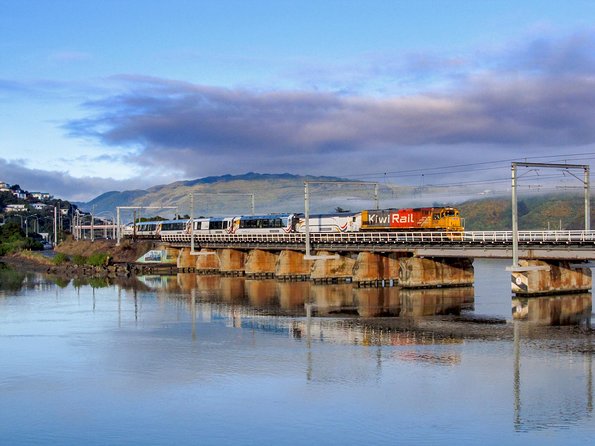
After the volcanic plateau, the route continues through more rural country and toward the Kapiti Coast. The scenery shifts again, with rocky coastal views and a different sense of space as the train nears Wellington.
By this point, you may be ready to arrive. That is the honest trade-off of this experience. Some people find the 11 hours pass quickly because there is always something to see, while others feel the final stretch is simply too long. The train is relaxing, but it is not short.
The scheduled arrival can also slip. One service arrived close to 7:15 pm instead of the expected 6:25 pm, making the day closer to 12 hours from boarding to arrival. I would avoid booking a tight evening dinner, onward tour, or flight connection in Wellington.
The journey ends at Wellington Station on Bunny Street, in Pipitea. There is no hotel pickup or drop-off, so arrange your own onward transport after leaving the station.
Who will enjoy the Northern Explorer most
I would choose this journey if you:
- Prefer trains to buses, cars, or flights.
- Want to see central North Island scenery that an airplane skips.
- Enjoy a slow day with changing views rather than a packed sightseeing schedule.
- Like the chance to walk around, use an open-air deck, and eat on board.
- Are comfortable with an 11-hour journey and a possible delay.
- Have flexible plans at both ends.
I would think twice if you:
- Need to reach Wellington quickly.
- Find long periods of sitting difficult.
- Have a fixed evening booking soon after arrival.
- Expect a live guide, frequent stops, or constant dramatic scenery.
- Need certainty about the departure point and exact seat before travel.
Children must be accompanied by an adult, and most people can take part. Service animals are allowed. The activity information lists a maximum of 15 participants, though the train experience itself is a long-distance service rather than a small guided sightseeing group.
Booking advice and final verdict
The Northern Explorer is a good choice when you want the route to be part of your holiday. The best moments come from the combination of comfortable seating, clean viewing windows, GPS commentary, the open-air deck, Tongariro’s volcanic peaks, the viaducts, and the Raurimu Spiral.
I would book it for the scenery, not for speed. Arrive early at Auckland Strand, confirm if a bus connection to Hamilton is in use, bring snacks and layers, and leave plenty of room in your Wellington schedule. Also remember that the fare is non-refundable and cannot be changed, so this is not a good purchase for uncertain plans.
For me, the train earns its place when you have a full day to give it. If you would rather fly over the North Island and spend those hours in Wellington, skip it. If you want to watch the countryside unfold, step outside for mountain views, and let someone else handle the road, this is one of the most distinctive ways to cross the island.
FAQ
How long is the Northern Explorer from Auckland to Wellington?
The journey takes approximately 11 hours, though arrival can be later than scheduled. One reported arrival was close to 7:15 pm instead of the expected 6:25 pm.
Where does the journey start and finish?
The scheduled departure point is Auckland Strand in Parnell, Auckland. The journey ends at Wellington Station on Bunny Street, Pipitea, Wellington.
What time does the train leave Auckland?
The scheduled departure time is 7:45 am. You should arrive at least 20 minutes before departure to check in and receive your boarding pass.
Does the journey always begin with a train in Auckland?
Not always. Planned maintenance on the Auckland line has resulted in a bus transfer from Auckland to Hamilton, where passengers board the train. Confirm the departure arrangement before travel.
Is food available on the train?
Yes. Each train has a licensed café carriage selling snacks, drinks, coffee, and light meals. Food and drinks are not included in the fare, and alcoholic drinks are available to purchase.
Is there an open-air viewing area?
Yes. The train has an open-air viewing deck where you can see the countryside without looking through glass. A jacket or sweater is useful, since conditions can be cooler outside.
Can I cancel or change the booking?
No. This experience is non-refundable and cannot be changed for any reason. If you cancel or request an amendment, the amount paid will not be refunded.
Recently added around Auckland
- Waiheke Island: Gulf Marine Park Sailing Adventure & Lunch★ 5.0 · 4 reviews
- Waiheke Island: Scenic PREMIUM Wine Tour. Max 11 clients★ 4.9 · 8 reviews
- Waiheke Island: Premium Vineyard, Wine Tasting and Bush Walk★ 5.0 · 4 reviews
- Flavours of Waiheke, wine, beer, spirits INCLUDES lunch – MAX 11★ 5.0 · 9 reviews
- Waiheke Island Private Double Headland Walk★ 5.0 · 5 reviews
- Heke Brewery and Distillery Tour in Waiheke Island with samples★ 4.5 · 3 reviews
- Waiheke Island Private Art Tour★ 5.0 · 5 reviews
- Waiheke Island Private History and Heritage Tour★ 4.5 · 7 reviews