
Reviewed · WORKSHOPS
2 Hour Surf Lesson – Te Arai Beach
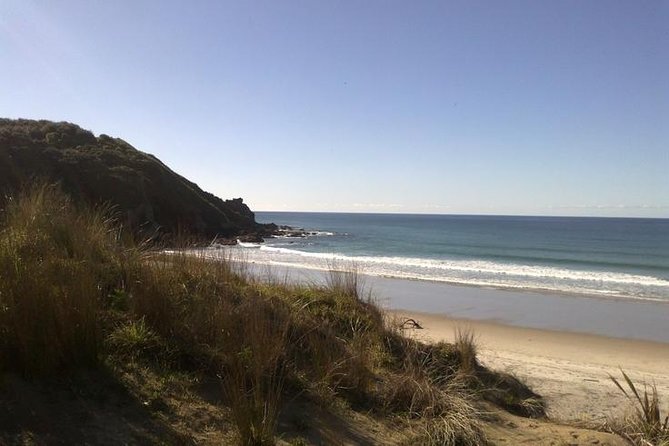
Te Arai Beach gives you a proper introduction to surfing without requiring a full day or a suitcase full of gear. In about two hours, you work on safety, board position, paddling, timing, the pop-up, and riding waves under the eye of a qualified instructor. The goal is simple: stand up and ride.
I like the small-group format, capped at 12 people, because it leaves room for individual advice. I also like that the price includes the board, leash, wetsuit, rash shirt, and sunscreen, so you can arrive ready to learn rather than assemble a beach kit. One consideration is the fixed two-hour lesson: it gives you a useful start, but not the repeated practice of a multi-day surf course.
Key points before you paddle out
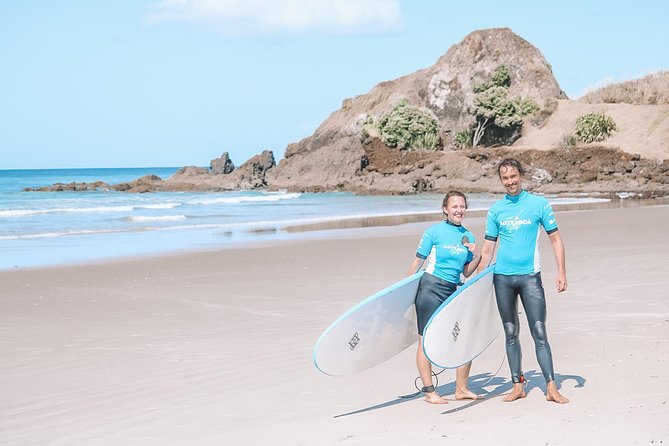
- Te Arai setting: You learn at a scenic east-coast beach north of Auckland, with the lesson beginning and ending at Aotearoa Surf School.
- Skills come first: The session covers safety, equipment design, positioning, paddling, ocean awareness, getting through waves, timing, and the takeoff.
- Gear is included: Your board, leash, wetsuit, rash shirt, and sunscreen are supplied.
- Small-group coaching: The maximum group size is 12, with lessons adapted for beginner, intermediate, and more advanced surfers.
- A useful first milestone: The focus is not just on standing once, but on learning enough technique to feel more confident hiring a board later.
- Flexible booking: Pickup is offered, mobile tickets are accepted, and free cancellation is available up to 24 hours before the start time.
Why Te Arai is a good place to begin surfing
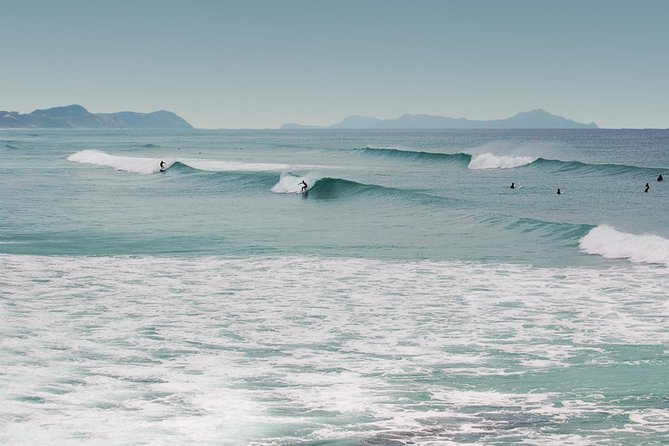
Te Arai sits on Auckland’s north-east coast, at 708 Te Arai Point Road. The setting matters. You are not learning in a swimming pool or on a flat patch of sand. You are working with real water, real waves, and the changing conditions that make surfing both exciting and demanding.
That is also why the lesson begins with safety and ocean awareness. Before you try to stand, you need to understand how to handle the board, where to position yourself, and how to get through incoming waves. These basics may sound less thrilling than riding, but they are what make the session useful beyond one afternoon.
The beach setting adds another benefit: you learn a skill you can use elsewhere. The lesson is designed to give you enough confidence and practical technique to hire a board later, including at another beach. You will not leave as a finished surfer, but you should have a much clearer idea of what to do next.
More surf lessons near Auckland:
- Auckland: Group Surfing Lesson with Muriwai Surf School
★ 4.9 · 34 reviews - Beginner Surf Lesson at Te Arai Beach
★ 5.0 · 6 reviews - Private 2 Hour Surf Lesson
★ 5.0 · 5 reviews
What happens during the two-hour lesson
The session is built around the full chain of surfing, not just the famous pop-up. You begin with safety and equipment design, so you understand how the board and leash work and how to use them properly.
Next comes positioning. Where you lie on the board affects balance, paddling, and whether the board catches a wave cleanly. A small change in body position can make the difference between gliding forward and pushing the nose underwater.
Paddling technique follows. Surfing requires more than strength. You need a steady stroke, good timing, and enough control to keep the board moving in the right direction. The instructor works with you on this before asking you to catch waves.
Ocean awareness is another key part of the lesson. You learn to read the water, watch incoming waves, and judge when to move. This is practical training, not background theory. It helps you decide when to paddle, when to wait, and how to get out through the waves without wasting energy.
The final stages are timing, takeoff, and the pop-up. Your instructor shows you how to move from lying on the board to standing in one quick, controlled motion. The aim is to repeat the movement until it feels less like a scramble and more like a reliable technique.
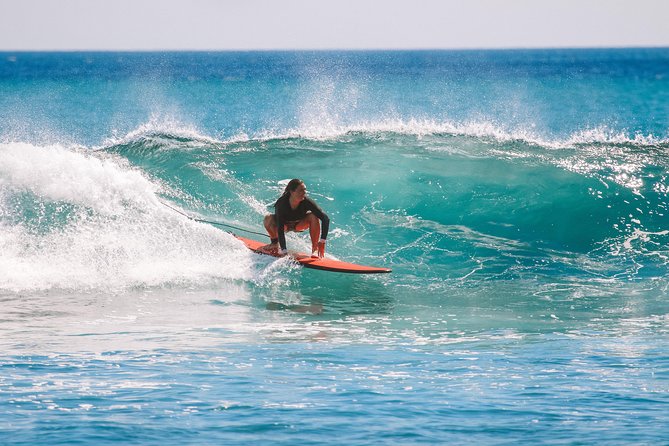
You then put those skills to work on the water. The highlight is likely to be catching a wave and standing long enough to feel the board carry you. Even a short ride can make the earlier safety work, paddling drills, and repeated pop-ups suddenly click.
A small group, but not a private lesson
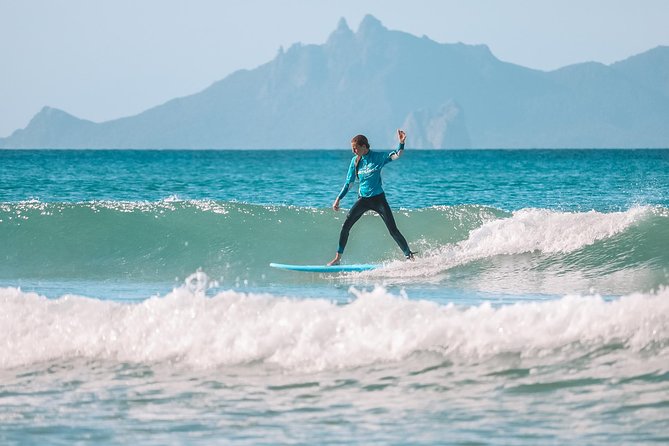
The maximum group size is 12 people. That is still a group lesson, so you should not expect constant one-on-one coaching. You may spend some time watching others take their turns or waiting for a suitable wave.
Still, the small-group structure is useful. Surfing lessons work best when an instructor can see your position, notice a weak paddle stroke, and correct the timing of your pop-up. A group of 12 gives the school a workable limit without turning the session into a mass beach class.
The coaching can be adjusted for different skill levels. Complete beginners can focus on safety, balance, and standing for the first time. Intermediate surfers can work on timing, paddling, and wave selection. More advanced participants can use the lesson to refine technique rather than repeat the very first steps.
That range matters for families or mixed groups. One particularly useful example comes from a four-day private booking with Maya, where the instruction handled beginner and intermediate ability levels and included a seven-year-old learning from scratch. That does not mean every two-hour group session includes Maya or is private, but it does show the school can adapt its coaching when ability levels differ.
If you are booking for a group with mixed experience, mention that when arranging the lesson. The supplied information confirms that lessons can be designed for several levels, so it is worth making your needs clear.
Gear included, with less beach-day fuss
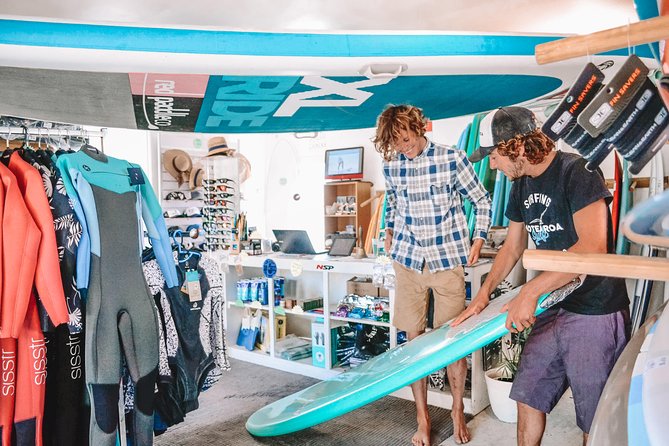
The price includes the surfboard, leash, wetsuit, rash shirt, and sunscreen. This is a major convenience, especially if you are visiting Auckland and do not want to carry bulky equipment around or buy items for a single lesson.
The wetsuit is practical rather than optional decoration. Even when the air feels warm, ocean water can make a long session uncomfortable without one. The rash shirt adds another layer between you and the board, while the leash keeps the board connected to you after a fall.
Sunscreen is supplied too. That small detail is easy to overlook when your attention is on waves and balance, but a beach lesson puts you outside for a sustained period. Having it included means one less thing to remember.
You should still arrive prepared for a physical activity. The lesson includes the required surf equipment, but it does not include souvenir photos. Photos are available to purchase if you want a record of your first successful ride, but they are an extra cost.
More workshops and classes in Auckland:
- Wētā Workshop Unleashed Tour – Auckland
★ 4.5 · 903 reviews - Auckland: Wētā Workshop Unleashed Guided Tour Ticket
★ 4.6 · 406 reviews - Wētā Workshop Unleashed – Intro to Scars and Scrapes Workshop
★ 5.0 · 5 reviews - Auckland: Perfume Making Class Introduction
★ 5.0 · 3 reviews
The value of NZ$50.92
At NZ$50.92 per person, this is a fair price for a two-hour lesson that includes equipment, a wetsuit, a rash shirt, sunscreen, an instructor, and all taxes and handling charges. The cost is easier to justify if you are starting from zero, because renting a board and wetsuit separately would not give you the same safety instruction or feedback.
The most important value is the correction you receive while learning. You can watch videos about pop-ups, but a qualified instructor can tell you why your board is turning, why the nose is sinking, or why you are standing too late. That immediate advice saves time and helps prevent you from repeating the same mistake.
The price is less attractive if you already surf confidently and only want board hire. This is a lesson, not a rental-only arrangement. It is aimed at helping you build technique, so experienced surfers should check whether the coaching matches their goals before booking.
For a first introduction, though, the included gear and instruction make the cost reasonable. You pay for a compact lesson rather than a full-day outing, which works well if surfing is one part of a wider Auckland trip.
What the best outcome looks like
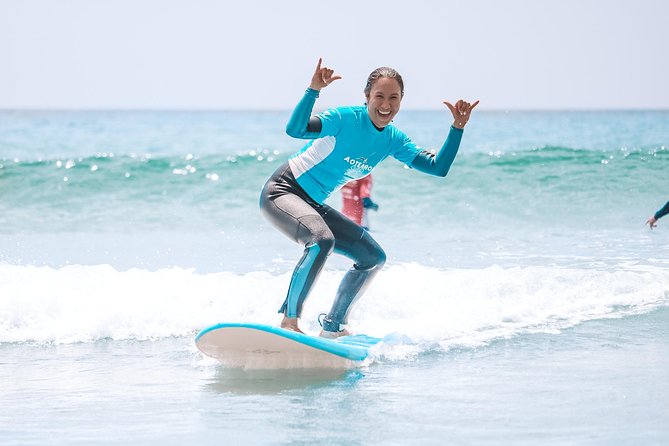
The obvious target is standing on the board and riding a wave. That moment matters, but the more lasting result is learning the process that gets you there.
You learn how to lie on the board, paddle with purpose, recognize the right moment, and move into the pop-up. You also learn what to do when things go wrong. Falling is part of surfing, and knowing how to handle the board and the water safely gives you confidence to try again.
One useful result is the ability to hire a board later. A first lesson cannot remove all uncertainty, but it can give you a foundation. You may still need more coaching, especially if the waves change or your balance is inconsistent, but you will not be starting with no idea what to do.
I would judge the session by progress rather than perfection. If you understand the safety rules, can paddle into position, and manage even one clean pop-up, the lesson has done its job. If you already have some experience, look for more specific gains in timing and wave selection.
Who will get the most from this lesson
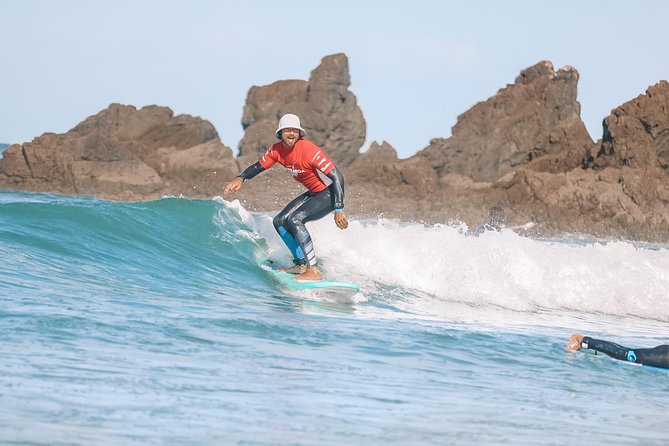
This suits first-time surfers who want a guided introduction near Auckland. It also works for people who have tried surfing before but never received clear instruction on positioning, paddling, or getting through the waves.
Families may find the adaptable teaching useful, especially when adults and children have different levels. The available information says most people can participate, and service animals are allowed. It does not provide a minimum age, so confirm age requirements directly if you are booking for a young child.
Mixed-ability groups can also make good use of the lesson. Beginners can learn the basics while stronger surfers receive more targeted help. The school specifically allows lessons for beginner, intermediate, and advanced levels.
This is less suitable if you want a quiet beach visit with no physical effort. Surfing involves repeated paddling, getting wet, falling, and trying again. The session is short enough to fit into a busy day, but it is still an active two hours.
Meeting point, pickup, and timing
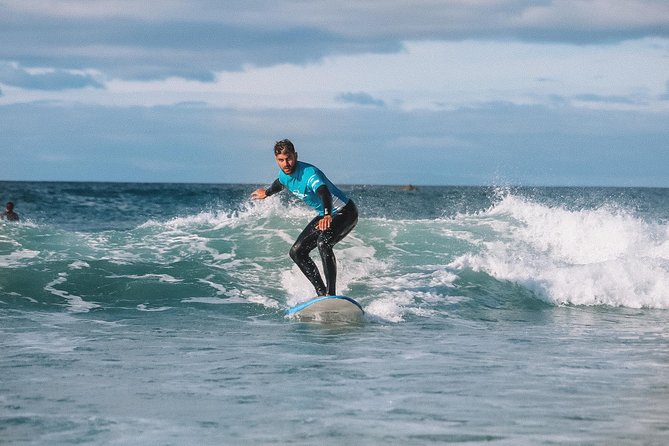
The listed meeting point is Aotearoa Surf School at 708 Te Arai Point Road, Te Arai 0975. The activity ends back at the meeting point, which keeps the arrangement simple if you are driving yourself.
Pickup is offered, but the available details do not specify the pickup area, schedule, or extra cost. Ask for those details before booking if you are not planning to make your own way to Te Arai.
The total duration is approximately two hours and 30 minutes, while the surf lesson itself is described as two hours. Allow the extra time rather than scheduling another activity immediately afterward. You may need time for arrival, preparation, equipment, and returning the gear.
Booking 35 days ahead is the average pattern for this activity. That does not guarantee every date sells out, but it is a useful warning for anyone planning around a fixed Auckland itinerary. If your dates are firm, booking earlier is sensible.
Booking and cancellation details
Confirmation arrives immediately after booking, and a mobile ticket is accepted. That makes the practical side easy, especially if you are already moving between stops in New Zealand.
You can cancel for a full refund up to 24 hours before the experience start time. Cancellations made less than 24 hours before the start time are not refunded, and changes inside that same window are not accepted.
The cutoff follows local time. Check the start time carefully before making changes, particularly if you are booking from another time zone.
Should you book the Te Arai surf lesson?
Book it if you want a focused, reasonably priced introduction to surfing with gear and sunscreen included. The lesson gives you more than a board and a beach. You learn safety, ocean awareness, paddling, positioning, timing, and the pop-up, then get a chance to use those skills in the water.
I would especially choose it for a first attempt, a mixed-level family group, or anyone who wants enough instruction to hire a board later. The strong 4.9 rating from 119 reviews and 98 percent recommendation rate fit the practical strengths here: attentive coaching, adaptable instruction, and a real chance to stand up and catch a wave.
Skip it if you only want equipment rental or if you need a full multi-day progression. Two hours can give you a valuable start, but surfing takes repetition. For most beginners, that is precisely the point: Te Arai offers a manageable first step without asking you to commit to a long course.
FAQ
How long is the Te Arai surf lesson?
The surf lesson lasts two hours, and the total activity duration is approximately two hours and 30 minutes.
Where does the activity begin?
The meeting point is Aotearoa Surf School at 708 Te Arai Point Road, Te Arai 0975, New Zealand.
What equipment is included?
The price includes a surfboard, leash, wetsuit, rash shirt, and sunscreen, along with the surf lesson and instruction.
Is pickup available?
Pickup is offered. The provided details do not specify the pickup locations, timing, or any additional cost.
How many people can join the lesson?
The activity has a maximum of 12 travelers.
What is the cancellation policy?
You can cancel at least 24 hours before the local start time for a full refund. Cancellations or changes made less than 24 hours before the start time are not accepted for a refund.
Recently added around Auckland
- Waiheke Island: Gulf Marine Park Sailing Adventure & Lunch★ 5.0 · 4 reviews
- Waiheke Island: Scenic PREMIUM Wine Tour. Max 11 clients★ 4.9 · 8 reviews
- Flavours of Waiheke, wine, beer, spirits INCLUDES lunch – MAX 11★ 5.0 · 9 reviews
- Waiheke Island: Premium Vineyard, Wine Tasting and Bush Walk★ 5.0 · 4 reviews
- Waiheke Island Private Double Headland Walk★ 5.0 · 5 reviews
- Heke Brewery and Distillery Tour in Waiheke Island with samples★ 4.5 · 3 reviews
- Waiheke Island Private Art Tour★ 5.0 · 5 reviews
- Waiheke Island Private History and Heritage Tour★ 4.5 · 7 reviews
Workshops, compared.


Wētā Workshop Unleashed – Intro to Scars and Scrapes Workshop
Read our review →
Browse the lists this tour appears in